Blog
How AI is Transforming Collections & Payment Automation: The 2026 Guide
February 18, 2026
5 min read
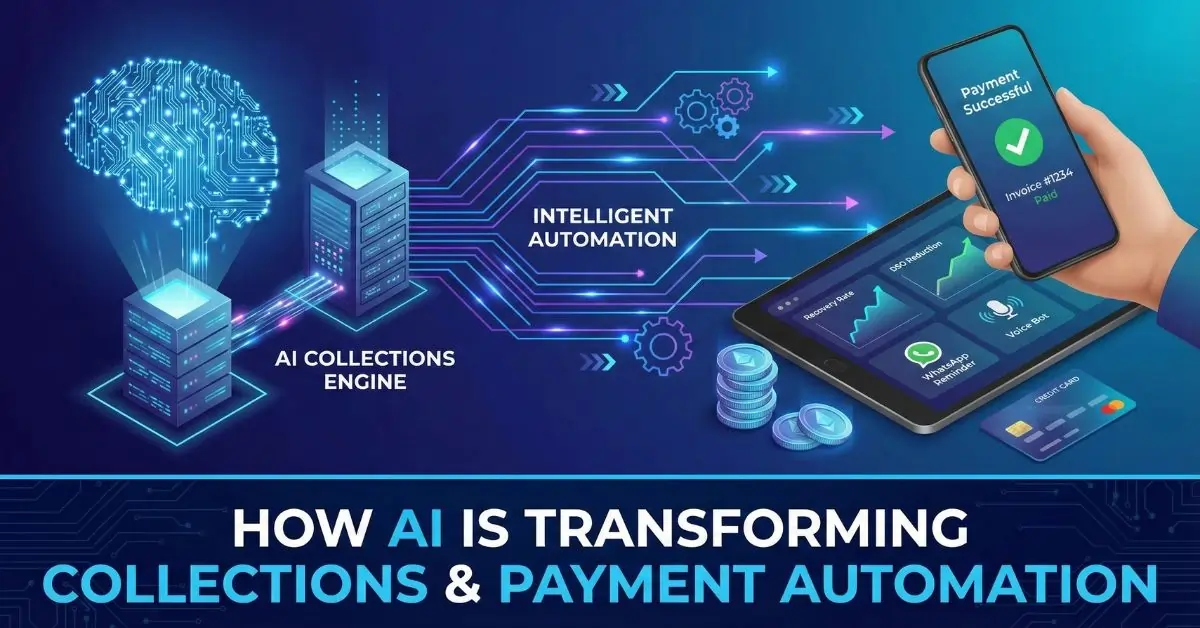
Let’s start with a hard truth that nobody likes to talk about at dinner parties: Debt collection is broken.
If you run a business, you know the feeling. You have delivered the service. You have sold the product. You have lent the money. And now? Now you are waiting. You are chasing. You are looking at a spreadsheet full of red cells, wondering why "Net 30" has turned into "Net 90."
For decades, the solution to this problem was blunt force. If you had 1,000 people who owed you money, you hired 10 people to call them. If you had 10,000 debtors, you hired 100 people. It was a factory floor model applied to a sensitive financial problem. It was loud, it was expensive, and quite frankly, it was inefficient.
But we are in 2026 now. The landscape has shifted beneath our feet.
We are seeing a massive transformation in how money moves and, more importantly, how we ask for it back. This isn't just about "automation" in the sense of setting up an auto-responder email. This is about AI Collections Software that thinks, learns, and speaks like a human. It is about systems that know when you are likely to pay before you even know it yourself.
This guide is going to walk you through everything. We will look at the technology, the psychology, the legal landscape in India (RBI norms), and the specific tools like Voice AI for Payment Collections and WhatsApp Payment Reminder Automation that are changing the game.
Whether you are a CTO at a major bank in Mumbai, a collection head at an NBFC in Delhi, or a founder of a fintech startup in Bengaluru, this guide is written for you.
Chapter 1: The Death of the Traditional Call Center
To understand the future, we have to look at why the past is failing.
The "Spray and Pray" Model
The traditional model of collections, often called "Spray and Pray," works on probability. You give a list of 500 numbers to an agent. They dial.
-
200 calls go to voicemail or are switched off.
-
150 people pick up and hang up immediately.
-
100 people say "wrong number" or "call me later."
-
50 people actually engage.
That is a lot of wasted human effort. Agents burn out. They get yelled at. They get tired. And when humans get tired, they make mistakes. They might get rude. They might forget to log a call. They might miss a compliance requirement.
The Cost of Human Capital
Hiring human agents is expensive. You aren't just paying a salary; you are paying for:
-
Recruitment and training.
-
Office space and electricity.
-
Dialer software licenses.
-
Attrition (the cost of replacing agents who quit).
In an Enterprise Collections Automation model, these costs don't scale linearly. With software, adding 10,000 new accounts to your system costs pennies in server space. Adding 10,000 accounts to a manual call center means hiring a new team.
The Compliance Minefield
In India, the Reserve Bank of India (RBI) has become extremely strict about how recovery agents behave. There are specific hours you can call. There are words you cannot use. There are privacy norms under the new Digital Personal Data Protection (DPDP) Act.
A human agent, under pressure to meet a target, might slip up. They might call at 8:00 AM instead of 9:00 AM. They might lose their cool. An Automated Debt Collection Software, however, never breaks the law. It is hard-coded to follow the rules. It literally cannot get angry.
Chapter 2: What is AI Collections Software?
So, what exactly are we talking about here?
AI Collections Software is an umbrella term for a suite of technologies that automate the "Dunning Process" (the process of communicating with customers to ensure the collection of accounts receivable).
It is not just a dialer. It is a decision engine.
The Core Components
-
The Intelligence Layer (The Brain): This uses machine learning to analyze data. It looks at payment history, credit scores, spending patterns, and even the time of day a user is most active on their phone. It builds a "Propensity to Pay" score for every single customer.
-
High Propensity: Don't bother them with a call. Send a polite WhatsApp.
-
Low Propensity: Prioritize for a voice bot or human intervention.
-
-
The Communication Layer (The Mouth): This is where the interaction happens. It includes:
-
Voice AI: Bots that speak and listen.
-
Chatbots: Conversational agents on WhatsApp or Web.
-
RCS/SMS: Text-based nudges.
-
-
The Orchestration Layer (The Conductor): This system decides which channel to use. It’s the traffic cop. It ensures you aren't spamming the customer. If the customer ignores an email, it tries a WhatsApp message the next day. If they ignore that, it schedules a call.
This is what we call an Intelligent Collections Platform. It removes the guesswork.
Chapter 3: The Technology Stack Deep Dive
Let’s get technical for a moment (but keep it simple). How does an AI Payment Follow-up Software actually work under the hood?
1. Generative AI & NLP (Natural Language Processing)
Old chatbots were "rule-based." You had to type exactly "Pay Bill" for them to understand. If you typed "I want to clear my dues," they would get confused.
Modern AI Debt Recovery Software uses Large Language Models (LLMs). They understand intent.
-
Customer: "Yaar, salary hasn't come yet. Can I pay next week?"
-
AI Interpretation:
-
Intent: Promise to Pay (PTP).
-
Reason: Cash flow issue (Salary).
-
Timeline: Next week.
-
-
AI Response: "I understand. Cash flow can be tight. I have noted your request. Shall I set a reminder for next Monday?"
This creates a conversational experience that feels human.
2. Voice Cloning & Speech-to-Text (STT)
For a long time, text-to-speech sounded like a robot from a 1980s movie. Today, with Voice AI for Payment Collections, we can clone voices to sound warm, empathetic, and local.
For the Indian market, this is crucial. A borrower in rural Maharashtra is more likely to respond to a bot speaking Marathi with a local accent than a bot speaking Queen's English. Platforms like Fonada specialize in these regional nuances, ensuring the bot sounds like "one of us."
3. Predictive Analytics
This is the math part. The system looks at thousands of data points.
-
Does this customer usually open emails? No.
-
Does this customer reply to WhatsApp? Yes.
-
Does this customer pay immediately after a salary credit? Yes.
The Automated Loan Collection System uses this to time the message perfectly. Sending a payment link at 10 AM on payday is 50% more effective than sending it at 4 PM on a Sunday.
Chapter 4: The Psychology of Payment (Why Bots Win)
This is the most fascinating part of the collections revolution. It turns out, people prefer owing money to machines.
The Shame Factor
Debt is shameful for many honest borrowers. When a human calls from a bank, the borrower feels judged. Their pride is hurt. Their defense mechanism kicks in they lie, they hang up, or they get angry.
But an AI Calling Bot for Collections? It’s just software. It doesn't have an opinion. It doesn't judge.
We have seen consistent data showing that borrowers are more honest with bots. They will admit, "I don't have the money right now," instead of making up a lie about "network issues." This allows the bank to actually help them—perhaps by offering a restructuring plan rather than just marking them as "unreachable."
The "Nudge" Theory
You cannot force someone to pay if they don't have money. But you can prioritize your debt over others. Most people owe money to multiple places credit card, utility bill, car loan, friend. Who gets paid first? Usually, it’s the one that is "top of mind" but not "annoying."
Smart Payment Reminder Solutions use "Nudges" gentle, timely reminders.
-
Nudge 1 (WhatsApp): "Hi Rahul, your bill is generated."
-
Nudge 2 (SMS): "Due in 2 days."
-
Nudge 3 (Voice Call): "Just a quick reminder for today."
This keeps your debt at the top of their priority list without becoming harassment.
Chapter 5: Omnichannel Strategies for India
India is a mobile-first country. We skipped the PC revolution and went straight to smartphones. Therefore, your Digital Collections Platform must be mobile-first.
1. WhatsApp: The King of Communication
With over 500 million users in India, WhatsApp is where business happens. WhatsApp Payment Reminder Automation is the single most effective tool in your arsenal.
-
Rich Media: You can send a PDF of the invoice directly.
-
Action Buttons: "Pay Now" buttons that link deeply to UPI apps (GPay, PhonePe).
-
Trust: Verified Green Tick accounts build trust.
(Read more on how to leverage this: Bulk WhatsApp Messages Guide 2026 and How to make a WhatsApp bot).
2. RCS (Rich Communication Services)
RCS is the upgrade to SMS. It comes natively on Android phones. It allows for branding (logos) and buttons, just like WhatsApp, but without the user needing an app. It is gaining massive traction for banking alerts. (Deep dive here: RCS backed by SMS).
3. Voice Bots (The Closer)
When text fails, voice works. An AI Voice Bot acts as the gentle enforcer. It is persistent but polite. It can handle thousands of calls simultaneously, something a human call center can never do. (See the impact: AI call center voice bots replacing traditional call centers).
Chapter 6: Industry-Specific Use Cases
AI Collections Software isn't one-size-fits-all. Here is how different sectors in India are using it.
1. BFSI & NBFCs (High Volume, Low Ticket)
The Scenario: An NBFC offers consumer durable loans (loans for phones, TVs). They have 500,000 customers. The loan amount is small (₹15,000). The AI Solution: Using human agents to collect a ₹1,500 EMI is a loss-making exercise. The NBFC uses an Automated Loan Collection System. The entire lifecycle from sending the EMI schedule to the final "Thank You" message is automated via WhatsApp and Voice Bots. Humans only step in if a customer defaults for 3 consecutive months.
2. Fintech & Digital Lending (Instant Loans)
The Scenario: An app lends money instantly for 15 days. Speed is everything. The AI Solution: AI Driven Recovery Management links with the app. If a user doesn't pay on Day 15, the bot triggers instantly on Day 16 morning. It offers a "Pay Extension" option for a small fee, converting a default into a revenue opportunity.
3. B2B Enterprises (Invoice Chasing)
The Scenario: A manufacturing company in Noida supplies parts to 200 dealers across UP. Dealers often delay payments. The AI Solution: A SaaS Collections Automation Platform integrates with their ERP. It sends automated "Statement of Accounts" emails and WhatsApp summaries to dealers every Friday. Dealers can click "Acknowledge" or "Dispute." This reduces the "I never got the bill" excuse.
4. Healthcare (Patient Billing)
The Scenario: Hospitals often have unpaid bills after insurance settlements. Calling patients to ask for the remaining ₹2,000 is awkward. The AI Solution: A Smart Payment Reminder Solution sends a polite text explaining the balance and offering a secure payment link. It feels administrative, not aggressive. (Check: Healthcare Patient Engagement with SMS IVR).
Chapter 7: The Fonada Advantage
If you are looking for a partner in this journey, geography matters.
You need a partner who understands the Indian ecosystem. Fonada, with its roots in Noida and operations across major Indian metros, understands the chaos of Indian telecom.
-
Connectivity: We have direct pipes to major operators, ensuring your Omnichannel Payment Reminder System doesn't suffer from latency.
-
Language: Our voice labs are constantly training on Indian dialects
-
Compliance: We build our tools with RBI and TRAI regulations as the foundation, not an afterthought.
When you work with a local expert, you aren't just buying software; you are buying peace of mind. (Explore our solutions: Fonada IVR software for startups and Request a Demo).
Chapter 8: Implementation Roadmap (Zero to Hero)
You want to start. How do you do it? Here is a step-by-step implementation guide for an Intelligent Collections Platform.
Phase 1: Discovery & Data
-
Audit your Data: Do you have mobile numbers? Are they valid? Do you have consent to contact them?
-
Define Success: What is your target? Lower DSO (Days Sales Outstanding)? Higher PTP (Promise to Pay)?
-
Segment Users: Group your borrowers by risk level.
Phase 2: Configuration & Integration
-
API Handshake: Connect the Collections Management System with AI to your existing LMS or ERP.
-
Script Design: Write the scripts for the Voice Bot and WhatsApp templates. Tip: Keep it short. Keep it polite.
-
Approval: Get WhatsApp templates approved by Meta.
Phase 3: The Soft Launch
-
Pilot: Run the system on 10% of your overdue accounts.
-
Listen: Listen to the call recordings. Is the bot interrupting? Is it understanding correctly?
-
Tweak: Adjust the parameters. Maybe call at 5 PM instead of 10 AM.
Phase 4: Full Rollout
-
Scale Up: Turn it on for 100% of accounts.
-
Monitor: Watch the dashboards. Look for the "Containment Rate" (how many calls are fully handled by the bot).
Chapter 9: The Future (2027 and Beyond)
Where is this going?
1. Financial Health Assistants
Collections will evolve into "Advisory." The AI won't just ask for money; it will help the user find it. "I see you are struggling with payments. I found a cheaper insurance plan for you. If you switch, you save ₹500/month which covers this EMI."
2. Biometric Payments
Voice AI will merge with UPI. You will be able to say, "Alexa, pay my loan," and your voice print will authorize the transaction. No OTPs needed.
3. Emotion AI
Bots will become emotionally intelligent. If a borrower sounds stressed or crying, the bot will instantly switch to a "compassionate mode," perhaps pausing the collection attempt and offering a helpline number.
Conclusion: The Human Side of Automation
We titled this guide "How AI is Transforming Collections," but perhaps it should be "How AI is Humanizing Collections."
For too long, debt recovery has been a source of stress—for the business owner trying to make payroll, for the agent trying to meet a quota, and for the borrower trying to manage their finances.
AI Collections Software de-escalates this stress. It brings logic, consistency, and politeness to a chaotic process. It ensures that every customer is treated with respect, every rule is followed, and every opportunity to collect is maximized.
If you are still running your collections on spreadsheets and manual dialers, you are fighting a modern war with ancient weapons. The technology is here. It is affordable. It is compliant. And it works.
Don't let cash flow kill your business.
Take the first step towards the future of finance. Request a Demo with Fonada Today and let us show you how to turn your recovery process into a revenue engine.
Get in touch with us:
👉 Contact us: https://bit.ly/47OjrVH
👉 WhatsApp: https://wa.me/7479574795?text=
👉 Subscribe on LinkedIn: https://bit.ly/4pPuQL8
👉 Schedule A DEMO: https://calendly.com/connect-fonada/30min
Share
.gif "Side Bar Gif")
Subscribe To Our Newsletter
Get updates and learn from the best
Mar 11, 2026
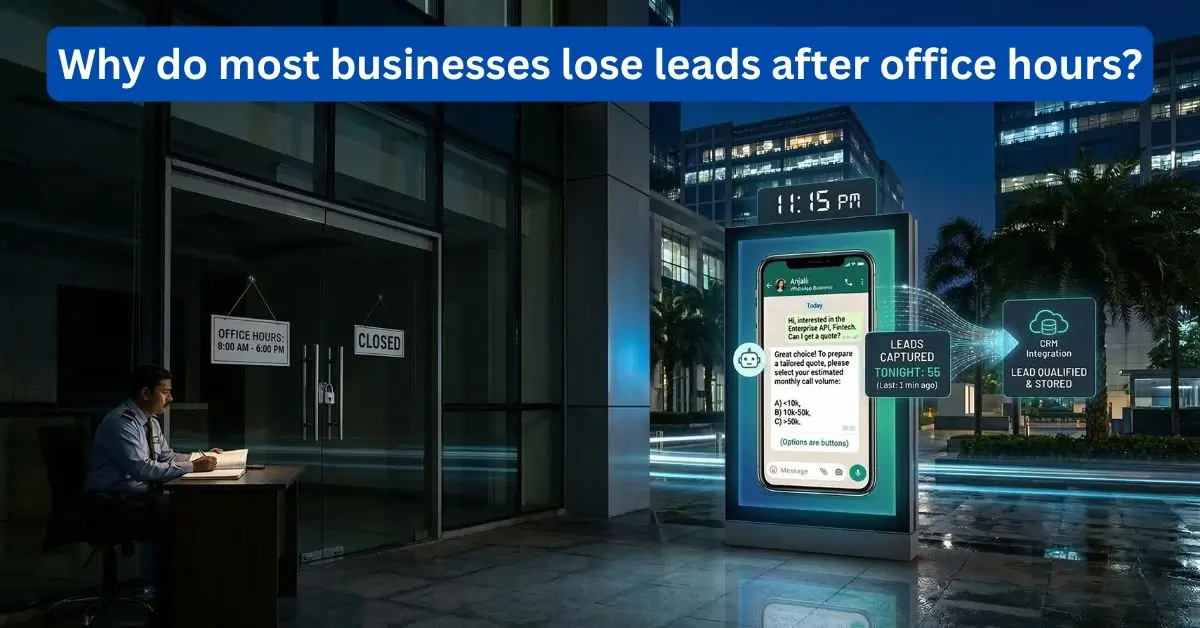
Why Most Businesses Lose Leads After Office Hours And How WhatsApp Automation Captures and Converts Them 24/7
How WhatsApp Automation Captures Leads After Office Hours Picture t... Read More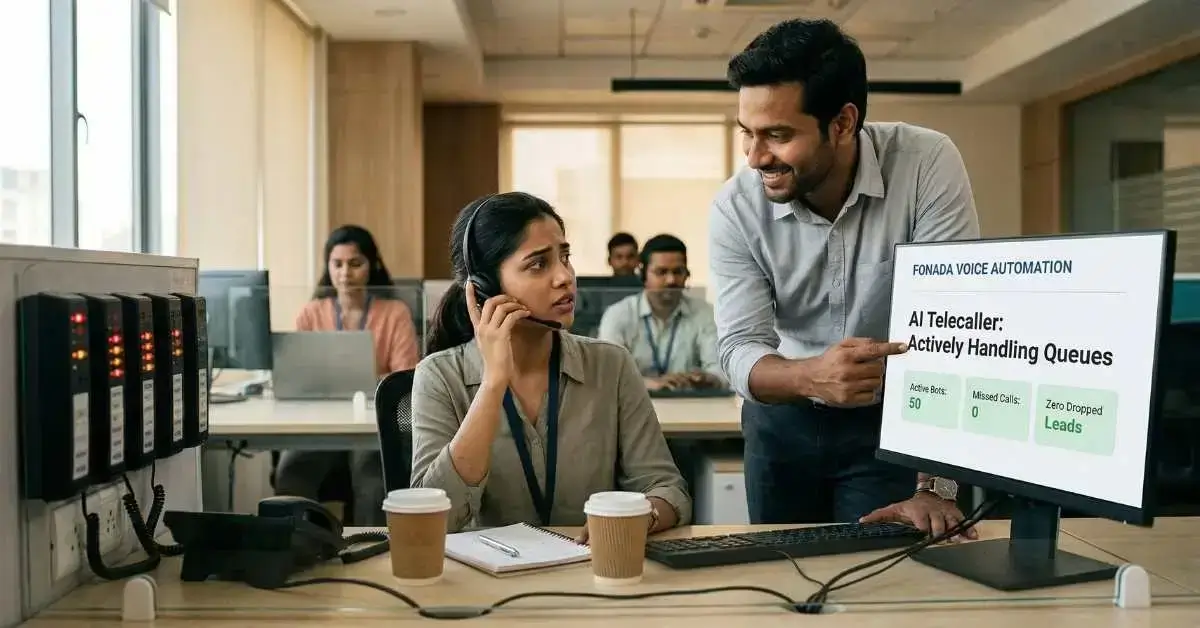
Mar 09, 2026
AI Telecallers: The Complete Guide to Automating Inbound Calls with AI Voice Agents
Missing a customer call is like closing the door on a paying client. F... Read More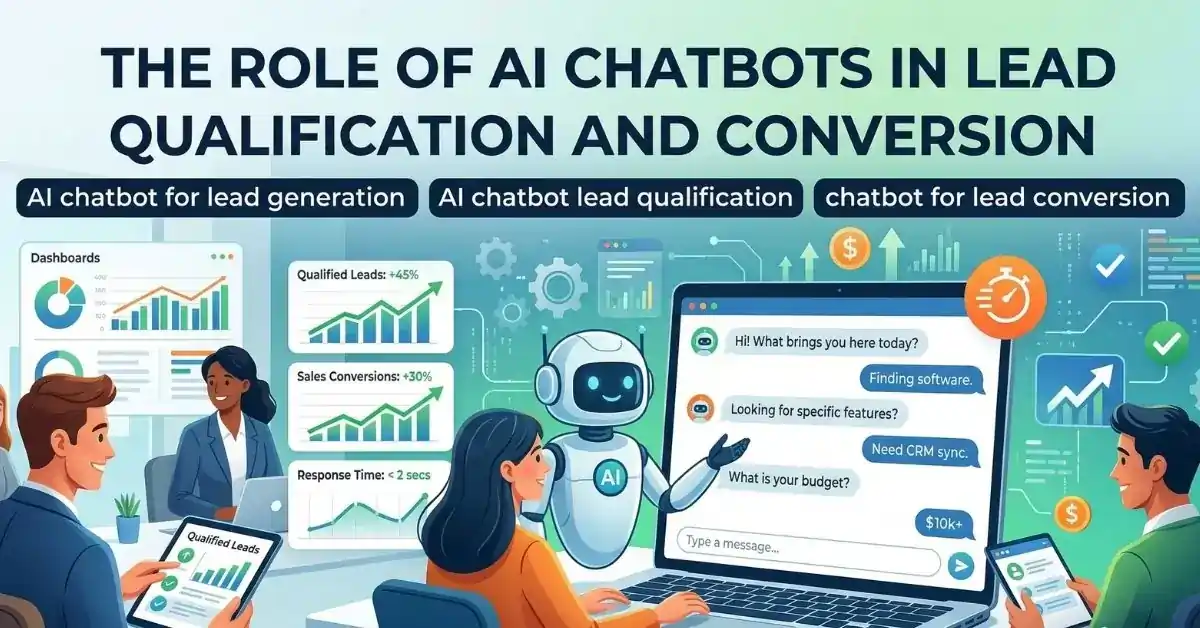
Mar 06, 2026
The Role of AI Chatbots in Lead Qualification and Conversion
The digital world moves incredibly fast today. Capturing the attention of your website visitors is h... Read MoreLatest Updates
From Fonada
Industry Insights, Trends, Innovations, Updates, and Case Studies from Industry Experts
View
Customer
Reviews
Discover why our customers love us - read their authentic and heartfelt reviews!
View
Case
Studies
Explore real-life scenarios, offering analysis, and solutions to practical challenges
View
Convert Leads Into Sales With Fonada
Trusted CPaaS Solution Provider