Blog
How E-commerce Brands Handle 10,000+ Customer Queries Without Hiring Support Staff
April 13, 2026
5 min read
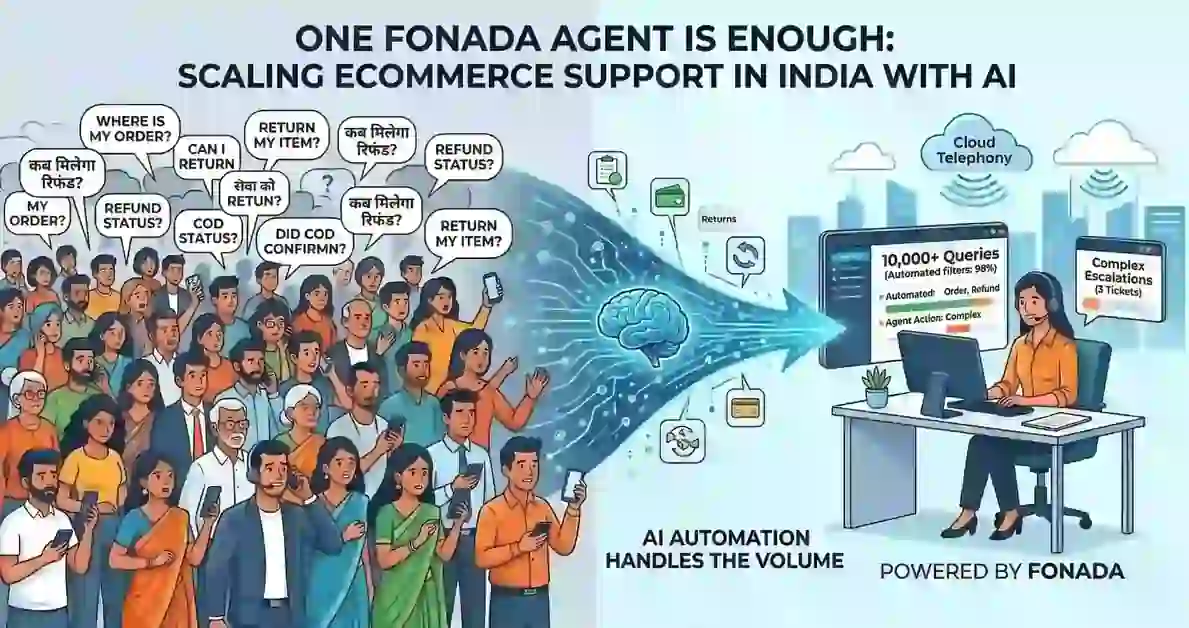
Ecommerce customer support automation is no longer optional for growing brands in India. If you are running an ecommerce business and struggling to handle high volume customer queries every single day, you already know exactly what the problem looks like. Orders are going out in the hundreds. Customers are sending the same questions over and over. Where is my order? When will I get my refund? Can I return this product? Is my COD order confirmed? And your support team is completely overwhelmed trying to keep up.
The traditional solution was simple. Hire more agents. But that approach breaks down fast. More agents means higher payroll, longer onboarding times, rising infrastructure costs, and a team that still cannot cover queries coming in at 11 PM. It is expensive and it simply does not scale with your business growth.
Smart D2C and ecommerce brands across India are solving this problem differently. They are using ecommerce customer service automation to handle 10,000 or more customer queries every single day without adding people to their support team. This blog explains exactly how they do it, which tools make it possible, five real use cases from the Indian market, and how you can start automating customer queries for your brand starting this week.
Why Ecommerce Customer Query Volume Is Exploding in India
The Indian ecommerce market is growing at a pace that most support teams simply cannot match. A brand doing 500 orders per day receives roughly 150 to 200 support queries daily under normal conditions. That number sounds manageable until you factor in peak sale events. During Diwali, Big Billion Day, End of Reason Sale, or even a flash discount campaign, daily queries can spike to 1,500 or even 3,000 in a single day. That is a 10x surge overnight.
What makes this harder is that the queries are not complex. Most of them are simple, repetitive, and predictable. Pull your last 30 days of support tickets and you will almost certainly find the same pattern.
- Order tracking and delivery status updates
- COD order confirmation follow-ups
- Return and exchange requests
- Refund status and timeline queries
- Payment failure complaints
- Order cancellation requests
- Basic product questions before purchase
Research across Indian ecommerce brands shows that these seven query types together account for 75 to 85 percent of total support volume. They are repetitive. They follow predictable logic. And they are perfect candidates for automation. This is the core insight that makes ecommerce support automation so powerful. You are not automating complex problems. You are automating the high volume, routine work that should never have needed a human in the first place.
One support agent handles around 80 to 100 queries per day at best. To manage 2,000 queries on a normal day you would need 20 plus agents. To handle a peak surge of 5,000 queries you would need 50. That is simply not realistic for most brands. This is exactly where automating customer queries for ecommerce changes the game completely.
What Is Ecommerce Customer Service Automation?
Ecommerce customer service automation is the use of AI-powered tools and smart workflows to automatically respond to, categorize, and resolve customer queries without a human agent being involved in every single interaction. Think of it as giving your support operations a set of intelligent systems that work around the clock, never get tired, never make stress-related mistakes, and can handle thousands of conversations at the same time.
The main technologies powering this are WhatsApp chatbots, AI voice bots for inbound calls, IVR systems, website chatbots, and automated SMS and email workflows. When these tools are connected to your order management system and shipping partners, they can pull live data and give customers accurate, real-time answers without any human involvement.
The result is that your automation layer handles 65 to 80 percent of all incoming queries automatically. Your human agents only see the remaining 20 to 35 percent, which are the genuinely complex cases that need judgement, empathy, and a real person.
Platforms like Fonada bring all of these capabilities together in one integrated customer service automation solution built specifically for Indian ecommerce and D2C brands.
The Real Cost of Running a Manual Support Team in Ecommerce
Before looking at solutions, it helps to see the problem clearly. Most ecommerce founders underestimate how expensive and fragile a manual support operation really is. Here is what the numbers actually look like when you are relying entirely on human agents.
|
Challenge |
Reality with Manual Support |
|
What does it cost per year? |
Rs. 36 to Rs. 53 Lakhs for just 10 agents including salary, training, tools, and attrition |
|
What does each query cost? |
Rs. 35 to Rs. 60 per query handled manually by an agent |
|
How fast do customers get answers? |
4 to 8 hours average wait time during business hours |
|
What happens after 9 PM? |
Nothing. Zero coverage. Customers wait until next morning. |
|
What happens during Diwali sale? |
Hire more agents urgently, response times still stretch to 12 to 24 hours, reviews turn negative |
|
How happy are customers? |
CSAT of 3.2 out of 5 on average across manual support teams |
|
What is the daily query ceiling? |
800 to 1000 queries max before the team starts missing responses and making errors |
This is the reality that brands face when they rely entirely on manual support. Every peak sale event becomes a crisis. Every night shift is a gap in service. And every new order means a little more pressure on a team that was never designed to scale this way.
5 Real Use Cases: How Ecommerce Brands in India Use Support Automation
Use Case 1: COD Order Confirmation Automation
Cash on Delivery is a uniquely Indian challenge. A significant percentage of COD orders get returned at the doorstep because the customer forgot they placed the order, changed their mind, or was simply not available. This creates massive reverse logistics costs for brands, with RTO (Return to Origin) rates often running at 25 to 40 percent for COD heavy categories.
Brands are solving this with automated outreach. Within minutes of a COD order being placed, the customer receives an automated voice call or WhatsApp message asking them to confirm the order. If they confirm, the order is dispatched. If they cancel, the brand saves the full shipping cost immediately. This single automation alone can reduce RTO rates by 20 to 35 percent.
See exactly how AI voice bots drive an 80 percent boost in ecommerce sales by reducing failed deliveries and improving order quality.
Use Case 2: Order Tracking Automation via WhatsApp
The single most common query across every ecommerce brand is some version of where is my order. In India, where customers track their deliveries multiple times a day, this query alone can make up 40 to 50 percent of total support volume. Answering it manually is a complete waste of agent time because the answer is always available in the shipping system already.
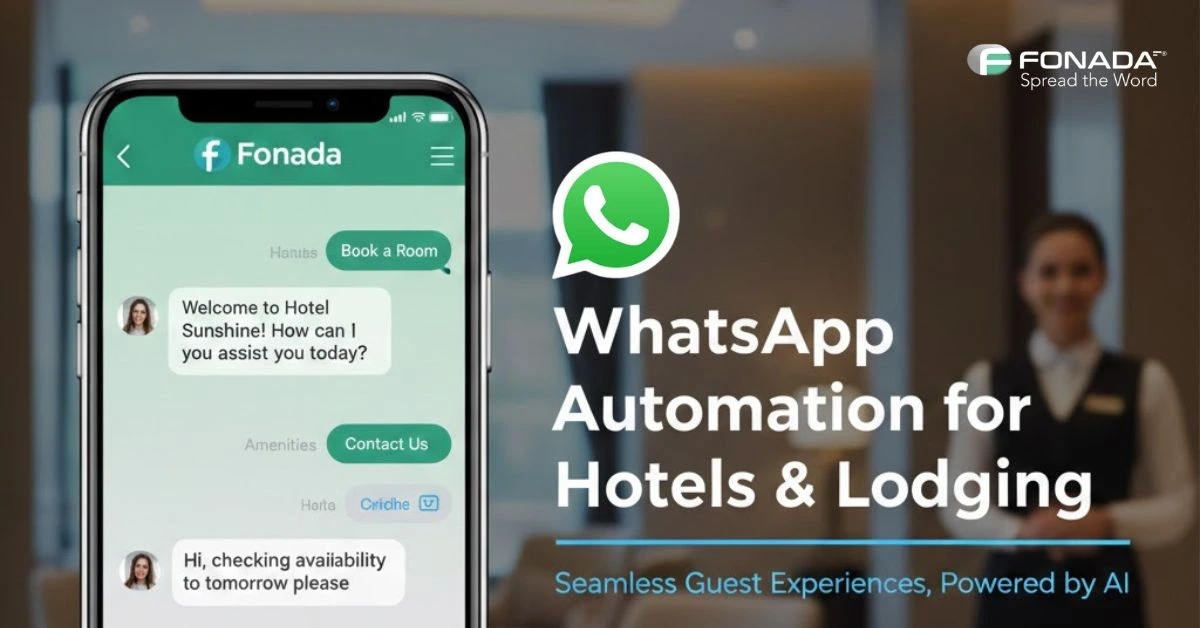
With WhatsApp automation, the moment a customer sends any message related to their order status, the bot fetches live tracking data from your shipping partner integration such as Delhivery, Shiprocket, BlueDart, or XpressBees, and sends back the exact delivery status in under five seconds. No hold time. No queue. No agent needed. Brands using this automation report a 60 to 70 percent drop in order tracking support tickets within the first month of going live.
Read the complete guide on setting up a WhatsApp chatbot for ecommerce in India including integration steps and flow design.
Also learn how to make a WhatsApp bot from scratch for your ecommerce support operations.
Use Case 3: Return and Refund Process Automation
Return requests are time consuming when handled manually. An agent has to verify the order, check whether it falls within the return window, confirm the product condition eligibility, create a return ticket, schedule a reverse pickup, and then send the customer a confirmation. This process takes 4 to 6 hours on average and consumes significant agent bandwidth every single day.
With a WhatsApp return bot, the entire process is handled automatically. The customer enters their order ID. The bot checks the return policy and eligibility. If eligible, it initiates the return, books the pickup with your logistics partner, and sends a confirmation with the pickup date and refund timeline. If the order is not eligible, it explains why clearly and offers alternatives such as exchange or store credit. The whole interaction takes under three minutes.
See how WhatsApp chatbot increases customer engagement for retail brands with automated post-purchase support workflows.
Use Case 4: Peak Season Surge Handling with IVR and Voice Bots
Peak sale events are where support operations either prove themselves or fall apart. During Diwali, Republic Day Sale, or End of Reason Sale, query volume spikes 5 to 10 times overnight. There is no way to hire and train 50 agents in 48 hours. Brands that rely on manual teams during these events face response times stretching to 12 or 24 hours, a flood of negative reviews, and agents making mistakes under pressure.
Brands that have deployed IVR systems and AI voice bots handle these surges without a single additional hire. The voice bot picks up every inbound call instantly, identifies the customer query, pulls live order data from the backend, and resolves it in under 60 seconds. During peak events, these brands report resolving up to 85 percent of all inbound calls automatically without any human involvement.
Learn how Fonada IVR software helps startups and SMEs manage high call volumes during peak seasons without extra hiring.
Also see how AI call center voice bots are replacing traditional call centers in 2026 and what this shift means for ecommerce brands.
Use Case 5: 24/7 After-Hours Customer Support
Your support team clocks out at 9 PM. Your customers do not. A large share of ecommerce shopping in India happens between 9 PM and midnight. Orders get placed, problems come up, and customers expect answers. When those answers do not come until the next morning, frustration builds and negative reviews follow.
With 24/7 automation, your WhatsApp bot and AI voice bot never go offline. A customer who has a payment failure at 1 AM gets an instant explanation and resolution steps. A customer checking their delivery status at midnight gets a live update. A customer wanting to cancel an order at 10 PM gets it done immediately. Brands that enabled round the clock automation consistently report a 40 percent improvement in CSAT scores and a significant reduction in negative reviews related to response time.
Understand why businesses lose leads and customers after office hours and how WhatsApp automation closes that gap completely.
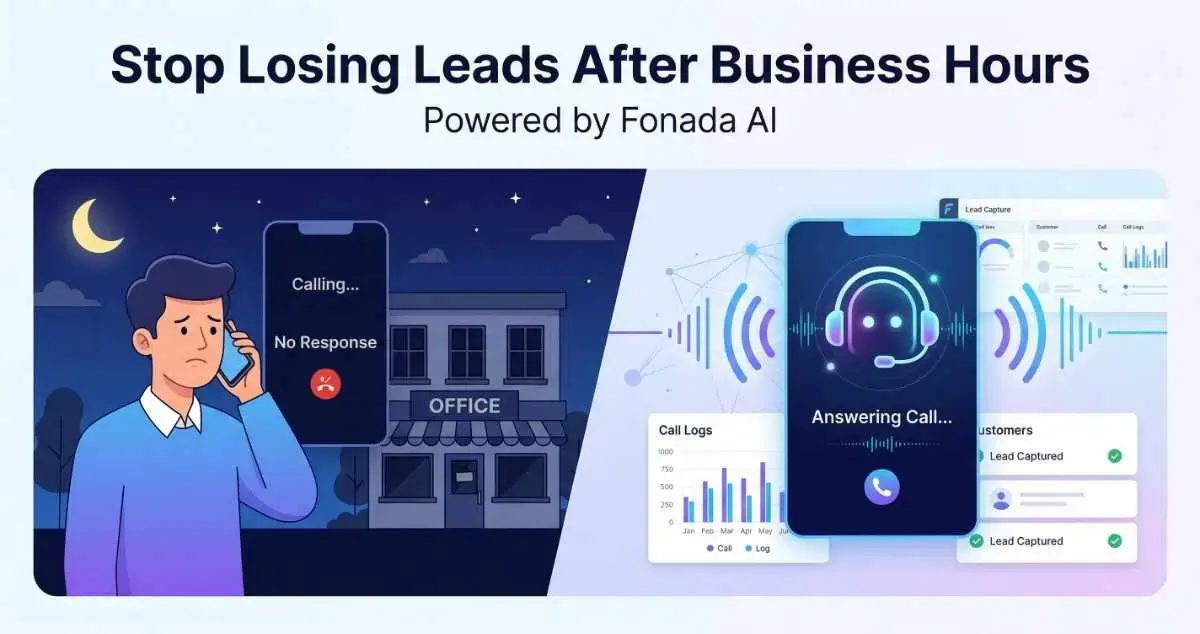
Read Fonada's guide on how to stop losing leads after business hours with AI to see the exact setup that makes 24/7 support possible.
Automation Tools Every Ecommerce Brand Should Know
|
Tool |
Best Used For |
Primary Channel |
|
WhatsApp Chatbot |
Order tracking, returns, COD confirmation, FAQs |
|
|
AI Voice Bot |
Inbound call handling, order status, cancellations |
Phone |
|
IVR System |
Call routing, peak season handling, ticket creation |
Phone |
|
Website Chatbot |
Pre-purchase queries, product help, live chat |
Website |
|
Bulk SMS / RCS |
Delivery alerts, payment confirmations, reminders |
SMS and Mobile |
|
Omnichannel Platform |
Unified inbox, full conversation history, agent handover |
All Channels |
For large-scale communication, read how bulk WhatsApp messaging works for ecommerce brands and how to use it for order alerts and promotional campaigns.
Also understand RCS messaging backed by SMS as the next evolution in ecommerce customer notifications.
Automating Inbound Calls: AI Voice Bots for Ecommerce Support
Not every customer prefers typing. In Tier 2 and Tier 3 cities across India, many customers are far more comfortable calling than using a chat interface. For these customers, the phone channel is critical and abandoning it is not an option. The challenge is that phone calls are expensive and slow to handle manually.
An AI voice bot solves this without replacing the phone channel. When a customer calls your support number, the voice bot picks up instantly with zero hold time. It greets the customer in Hindi or English, listens to their query, understands the intent using Natural Language Processing, fetches the relevant data from your backend systems, and responds in natural-sounding conversational speech. For complex queries that the bot cannot resolve, it smoothly transfers the call to a human agent along with a summary of the conversation so the customer never has to repeat themselves.
Read the complete guide to automating inbound calls with AI voice agents for a step-by-step breakdown of how to set this up for your ecommerce brand.
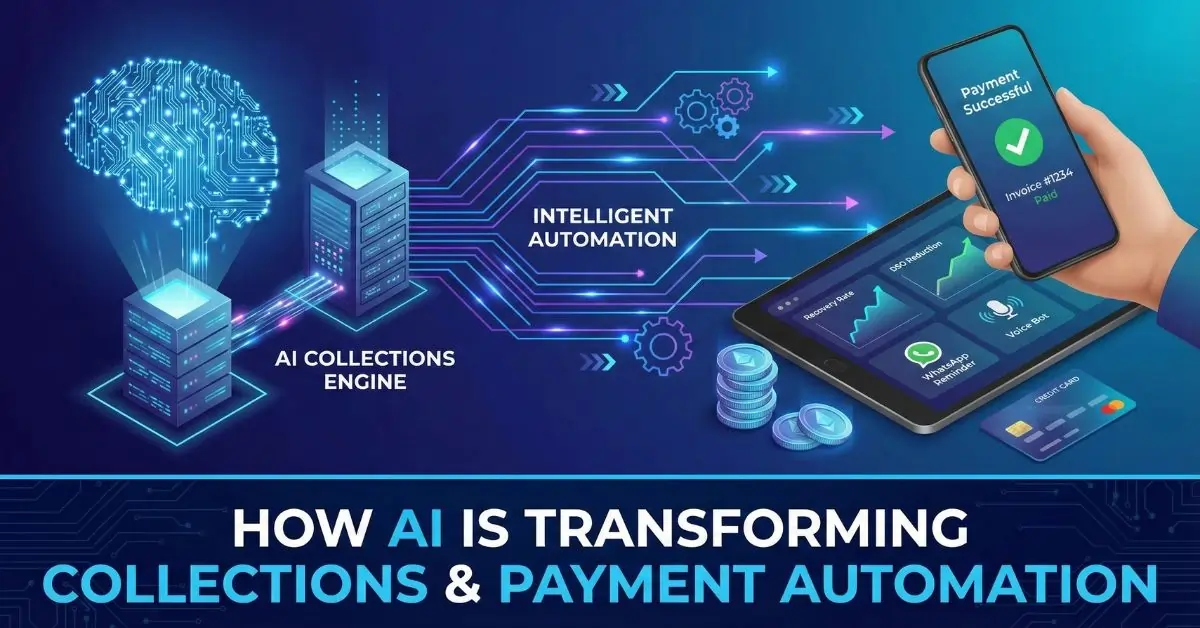
Also explore how AI is transforming collections and payment automation which is directly useful for ecommerce brands dealing with COD reconciliation and EMI payment follow-ups.
How to Start Automating Ecommerce Customer Support
The biggest mistake brands make is trying to automate everything at once. The right approach is to start with one high-volume query type, prove the results, and then expand systematically. Here is a simple roadmap to follow.
- Step 1: Pull your last 30 days of support tickets and identify your top 5 to 7 query types by volume
- Step 2: Set up a WhatsApp Business API account and connect it to a chatbot platform
- Step 3: Build an order tracking bot that integrates with your shipping partner API
- Step 4: Go live and measure the reduction in order tracking tickets to your agents over 30 days
- Step 5: Add the next automation layer, either COD confirmation, return initiation, or after-hours coverage
- Step 6: Set up clear escalation rules so complex queries reach a human agent smoothly
- Step 7: Track your automation resolution rate, response time, and CSAT every month and improve
This incremental approach keeps things manageable and lets you see real ROI before committing to a full-scale rollout. Most brands that follow this process see measurable results within the first 30 days of their first automation going live.
Ready to see what this looks like in practice? Request a demo from Fonada and see how quickly you can get your first ecommerce customer support automation live.
Conclusion
Handling 10,000 customer queries daily without a proportional increase in support staff is not a distant goal for large enterprises. It is something ecommerce brands of all sizes are achieving right now using WhatsApp bots, AI voice bots, IVR systems, and omnichannel automation platforms. The tools are accessible. The cost savings are proven. The impact on customer experience is measurable.
The brands that win on customer experience in Indian ecommerce over the next few years will not be the ones with the largest support teams. They will be the ones that automated the right things early, gave customers instant answers around the clock, and freed their human agents to focus on the conversations that actually need a personal touch.
Visit Fonada to explore the complete customer support automation platform built for Indian ecommerce and D2C brands. Also learn about what business communication looks like when automation is done right.
Explore more solutions on the Fonada website here: 👉 Fonada
Get in touch with us:
👉 Contact us: https://bit.ly/47OjrVH
👉 WhatsApp: https://wa.me/7479574795?text=
👉 Subscribe on LinkedIn: https://bit.ly/4pPuQL8
👉 Subscribe A DEMO: https://calendly.com/connect-fonada/30min
Share
.gif "Side Bar Gif")
Subscribe To Our Newsletter
Get updates and learn from the best
Apr 03, 2026
How to Stop Losing Leads After Business Hours with Fonada AI Call Answering System
Imagine this. A potential customer calls your business at 8:45 PM. The... Read More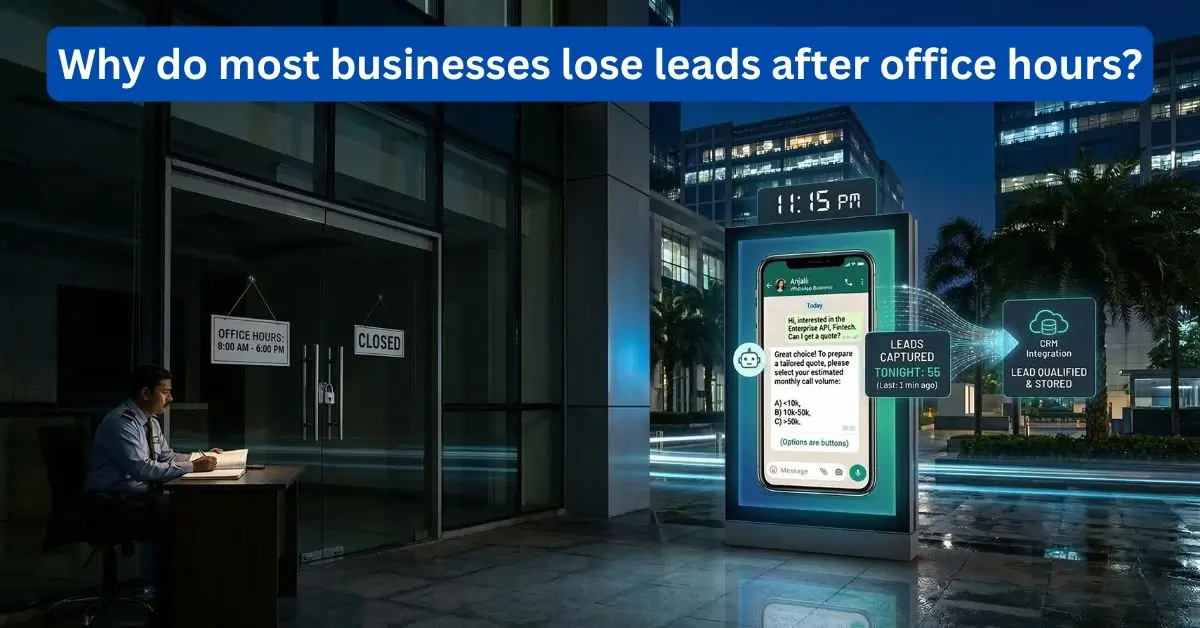
Mar 11, 2026
Why Most Businesses Lose Leads After Office Hours And How WhatsApp Automation Captures and Converts Them 24/7
How WhatsApp Automation Captures Leads After Office Hours Picture t... Read More
Mar 09, 2026
AI Telecallers: The Complete Guide to Automating Inbound Calls with AI Voice Agents
Missing a customer call is like closing the door on a paying client. F... Read MoreLatest Updates
From Fonada
Industry Insights, Trends, Innovations, Updates, and Case Studies from Industry Experts
View
Customer
Reviews
Discover why our customers love us - read their authentic and heartfelt reviews!
View
Case
Studies
Explore real-life scenarios, offering analysis, and solutions to practical challenges
View
Convert Leads Into Sales With Fonada
Trusted CPaaS Solution Provider