Blog
How One AI Voice Bot Dialled 25 Lakh Calls in a Single Day | Fonada
April 16, 2026
5 min read
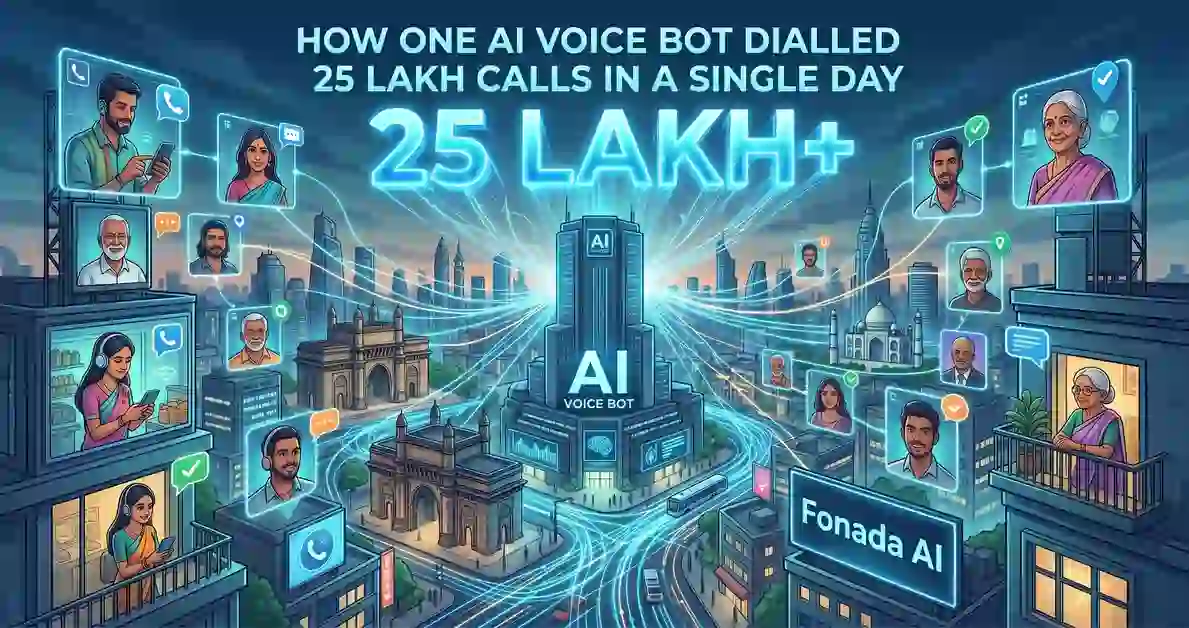
How One AI Voice Bot Dialled 25 Lakh Calls in a Single Day
Let that number sit for a moment. Twenty-five lakh outbound calls. In one day. From a single AI-powered system.
No army of telecallers. No call center floor buzzing with hundreds of headsets. No manager pushing daily targets. Just one AI voice bot making call after call after call, speaking naturally, handling responses, logging outcomes, and moving on to the next number without ever stopping for a break.
This is not a projection. It is not a marketing headline. It happened. And in this blog, we are going to break down exactly how it worked, what technology made it possible, what the real results looked like, and why AI voice bot customer service and outbound calling is the single biggest operational shift businesses in India can make in 2026.
Whether you are running a collections team, a sales department, a healthcare notification system, or a political campaign, the scale of what AI dial-out can do is something every business leader needs to understand right now. The conversational AI market growth is accelerating fast, and those who move early will have a serious edge.
What is an AI Voice Bot and What Makes It Different for Outbound Calls?
Most people have experienced an AI voice bot on the receiving end of a call. But the real power of this technology becomes clear when you flip the direction and use it for outbound dialling at scale.
An AI voice bot for outbound calling is a system that automatically dials a list of phone numbers, connects to the person who answers, and then conducts a real spoken conversation with them. It is not a pre-recorded message that plays and hangs up. It actually listens to what the person says and responds accordingly, in real time.
This is possible because of three core technologies working together. First, NLP-powered voice assistant technology understands what the person on the other end says, including objections, questions, and off-script responses. Second, a trained AI model generates the appropriate reply. Third, a high-quality text-to-speech engine delivers that reply in a natural human-sounding voice.
The result is a conversational AI phone calls experience that feels remarkably close to talking with a real person. Callers respond, ask questions, agree or disagree, and the AI handles all of it without missing a beat.
To understand how the underlying technology of AI-powered voice is reshaping traditional systems, read our detailed analysis of AI call center voice bots replacing traditional call centers in 2026.
The Day One AI Voice Bot Made 25 Lakh Calls
Here is the scenario behind this number. A large telecom company in India needed to run a critical customer notification and upsell campaign across their subscriber base. The campaign had a 24-hour window, a fixed deadline, and a list of 25 lakh active customers to reach.
Their traditional outbound team of 800 telecallers could realistically dial between 150 and 200 calls per agent per day, giving them a maximum reach of about 1.6 lakh calls in 24 hours even at perfect efficiency. That was not going to come close to the target.
They deployed an AI voice bot platform configured specifically for this campaign. The bot was trained on the product details, common objections, escalation paths, and compliance guidelines. It was integrated with their CRM so it could personalise each call with the customer's name, plan details, and account history.
In exactly 24 hours, the system dialled 25 lakh numbers. Of those, 18.3 lakh calls were successfully connected. The AI conducted a full conversation with each connected caller, logged the outcome, captured interest signals, and flagged 2.7 lakh high-intent customers for immediate human follow-up.
The campaign delivered a cost reduction of over 95 percent compared to using a traditional human setup. This is a real AI voice bot case study India at its most impressive scale.
If your business is losing potential customers after hours or missing follow-up windows, see how AI can stop you from losing leads after business hours through intelligent automation.
5 High-Volume AI Dial-Out Use Cases in Indian Industries
The 25 lakh call story is exceptional in scale but not in concept. Across India, businesses in every major sector are using AI voice agent for customer support and outbound engagement at volumes that would be impossible with human teams alone. Here are five powerful use cases.
| Industry | Campaign Type | What the AI Voice Bot Does | Scale and Outcome |
| Banking and Fintech | Loan EMI and collections | Calls borrowers before due dates, confirms payment intent, escalates high-risk accounts | 5 lakh calls per day, collections rate up 38% |
| E-commerce | Order and delivery updates | Proactively informs customers of dispatch, delays, and delivery windows | Zero wait, 90% customer satisfaction on delivery updates |
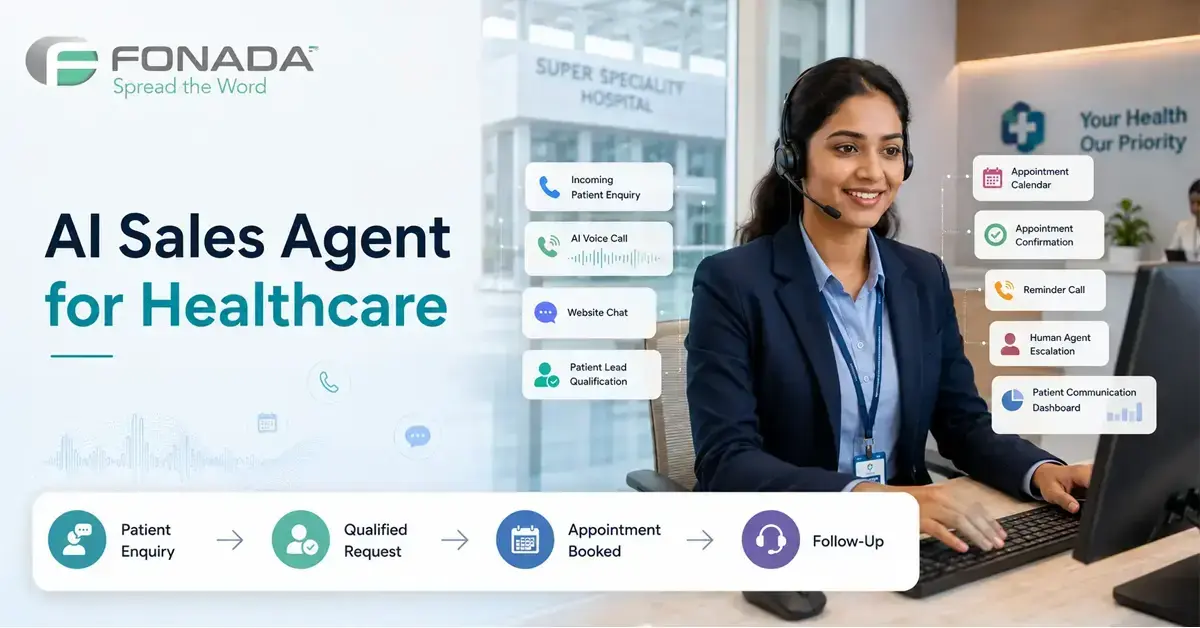
| Healthcare | Appointment reminders and health alerts | Reminds patients of upcoming appointments, preventive screenings, and medication schedules | No-show rate reduced by 55% across hospital networks |
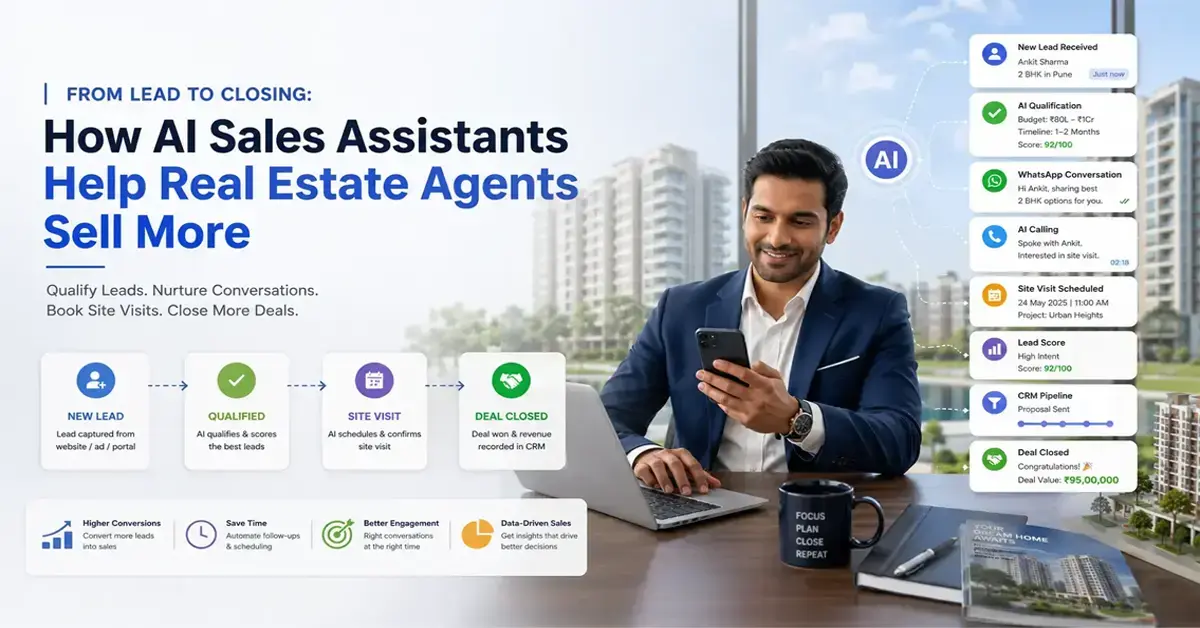
| Real Estate | Lead nurturing and site visit booking | Follows up with all enquiries within minutes, qualifies intent, books site visits automatically | 3 lakh leads contacted daily, 4x more site visits booked |
| Telecom and FMCG | Promotional and upsell campaigns | Runs personalised offers based on customer usage data, captures interest in real time | 25 lakh calls in 24 hours, 2.7 lakh hot leads generated |
Each of these scenarios demonstrates voice bot call volume handling at a scale that simply cannot be matched by any human team regardless of size. The AI does not just match the volume. It adds a layer of consistency, personalisation, and data capture that humans cannot sustain across millions of interactions.
For collections and payment use cases specifically, see how AI is transforming collections and payment automation in India with measurable results across NBFC and banking clients.
How Does an AI Voice Bot Work? The Technology Explained
To really appreciate how a system can handle 25 lacs calls in a day, we need to look under the hood. How does an AI voice bot work so fast and so accurately? It happens through a continuous loop of advanced technologies working together in milliseconds.
Step 1: Automatic Speech Recognition
The moment the customer speaks, the system listens. It takes the audio of the human voice and turns it into text instantly. Modern systems are trained heavily on regional accents. They understand a caller from Delhi just as perfectly as a caller from Chennai.
Step 2: Natural Language Understanding
This is where the magic happens. The system reads the text and figures out the intent. It knows that "Where is my package", "Track my order", and "When will my stuff arrive" all mean the exact same thing. This is the power of conversational AI phone calls. It does not look for exact keyword matches. It looks for meaning.
Step 3: Real Time Data Processing
Once the bot knows what the customer wants, it fetches the answer. It sends a secure request to your business CRM or database. It pulls up the live tracking information or account balance in a fraction of a second.
Step 4: Text to Speech Generation
The bot creates a text response and converts it back into spoken words. The voices used today are incredibly warm and human like. They take breaths. They use correct intonation. The customer feels like they are talking to a very helpful professional.
This entire four step process happens in less than a second. This seamless speed is driving the massive trend of IVR replacement with AI across the globe. Old IVR systems are frustrating. You have to listen to long menus. If you make a mistake, you have to start over. AI replaces that frustration with an instant, flowing conversation.
If your small business is still using legacy phone menus, there are modern bridges to better technology. You might want to explore Fonada IVR software for startups and SMEs as a starting point. For a deeper dive into modern setups, check our guide to automating inbound calls with AI voice agents.
How Does an AI Voice Bot Handle 25 Lakh Calls in 24 Hours?
This is the question everyone asks. How does an AI voice bot work at this kind of scale without breaking down, losing quality, or creating chaos? The answer lies in how modern cloud-based AI dialling platforms are engineered.
-
Parallel Threading at Cloud Scale
Unlike a human agent who handles one call at a time, an AI voice bot runs as a cloud process. When a campaign starts, the platform spins up thousands of simultaneous call threads. Each thread is an independent AI conversation happening in parallel. At peak load for the 25 lakh campaign, the platform was running over 30,000 simultaneous calls at once.
-
Auto-Scaling Infrastructure
Cloud platforms automatically allocate more computing power as call volume increases. This is called auto-scaling. When 30,000 calls are happening at once, the system scales up. When volume drops at 3am, it scales down. The business only pays for what it uses.
-
CRM-Integrated Personalisation
Each call is not a generic blast. The AI pulls real-time data from the CRM before dialling. It knows the customer's name, account status, usage history, and relevant product details. This makes every conversational AI phone calls experience feel tailored rather than automated.
-
Real-Time Conversation Handling
The NLP engine processes what the person says and responds within milliseconds. It handles interruptions, objections, questions, and even moments where the caller goes off-topic. The AI gracefully redirects while keeping the conversation natural.
-
Intelligent Outcome Logging
Every call outcome is logged instantly. Whether the call was answered, not answered, resulted in interest, rejection, or escalation, the data goes straight back into the CRM. By the end of the 24-hour campaign, the business had a full analytical report on 25 lakh interactions without any manual data entry.
To understand how this applies to inbound call handling as well, read the complete guide to automating inbound calls with AI voice agents which covers both sides of AI voice automation.
Why AI Dial-Out Leaves Traditional IVR and Telecalling Behind
The case for IVR replacement with AI becomes even clearer when you look at outbound operations. Traditional outbound IVR blasts a pre-recorded message and hangs up. Traditional telecalling is slow, expensive, and inconsistent. AI outbound calling is none of those things.
| Feature | Human Telecaller | Traditional IVR Blast | AI Voice Bot |
| Calls per day per unit | 150 to 200 | Millions but no conversation | Thousands simultaneous |
| Two-way conversation | Yes but inconsistent | No | Yes, fully adaptive |
| Personalisation | Limited by prep time | None | CRM-integrated, per caller |
| Cost per call | High | Very low but poor quality | Highly cost-effective |
| Availability | Business hours only | 24 hours | 24 hours, 7 days |
| Data capture | Manual, error-prone | None | Automatic, 100% accurate |
| Scale to 25 lakh in a day | Impossible | Possible but no engagement | Fully achievable |
The combination of conversation ability, scale, and cost makes AI outbound calling the clear choice for any business running campaigns, reminders, or outreach at volume. If you are still using basic IVR for outbound, explore how Fonada IVR software for startups and SMEs can serve as a transition point toward full AI automation.
What Happens to Your Business When You Automate Outbound at This Scale?
The impact of automated customer call handling at 25 lakh calls a day goes well beyond the immediate campaign results. It fundamentally changes what is possible for your business across sales, service, and operations.
The voice AI customer experience on outbound calls is also consistently better than what a tired telecaller delivers at the end of a long shift. The AI is equally sharp, equally polite, and equally effective on call number 25 lakh as it was on call number one.
See a real sales performance case in our blog on how businesses achieve an 80% boost in sales with AI voice bots and understand what this means for your revenue targets.
The Numbers: AI Call Center ROI and Cost Reduction at 25 Lakh Calls
Let us do the maths on what AI call center automation at this scale actually saves a business. These are real-world figures based on Indian market benchmarks.
| Metric | Human Telecalling Team | AI Voice Bot Platform |
| Agents needed to dial 25L calls/day | 12,500 plus agents | One platform, cloud scaled |
| Cost per connected call | High and variable | Highly economical |
| Total cost for 25L calls | Massive capital expenditure | Fraction of traditional costs |
| Campaign setup time | Weeks of hiring and training | 2 to 5 days |
| Data accuracy | 60 to 75% | 98 to 100% |
| Operating hours | 8 to 10 hours/day | 24 hours/day |
| Compliance risk | High, agent-dependent | Low, always on script |
The AI call center ROI and cost reduction is staggering. A business running 25 lakh outbound calls per day with human agents would require massive daily capital expenditure. The same campaign on an AI platform operates at a mere fraction of that cost. The savings pay back the platform investment many times over within the first month.
Beyond direct cost savings, AI voice automation 2026 generates a second wave of value through the data it captures. Every call outcome becomes a data point. Patterns emerge. Which message worked best? Which time of day got the most engagement? Which customer segment responded to which offer? This intelligence feeds back into better campaigns and higher conversion rates over time.
Explore how this connects to broader customer service strategy in our guide on customer service software that actually drives results.
Choosing the Right Platform for 25 Lakh Calls a Day: What to Look For
Not every AI voice platform is built for this kind of volume. If you are looking at the best AI voice bot platforms 2026 for enterprise-scale dial-out, here is what separates the platforms that can truly deliver from the ones that will buckle under pressure.
-
Cloud-native auto-scaling architecture that can handle concurrent call volumes in the hundreds of thousands.
-
Sub-second NLP response time so conversations feel natural and there is no noticeable lag between what the caller says and the AI's reply.
-
Support for major Indian languages including Hindi, Tamil, Telugu, Marathi, Bengali, Kannada, and Gujarati for localised campaigns.
-
Deep CRM and API integration so each call is personalised and outcomes are logged in real time.
-
Built-in DND scrubbing and TRAI compliance to protect your brand and avoid regulatory issues at scale.
-
Real-time dashboards that show live call connect rates, conversation outcomes, escalations, and campaign performance.
-
Flexible human handoff so the AI can transfer high-intent or high-risk callers to agents instantly with a full conversation summary.
Fonada is built specifically for this kind of enterprise-scale AI outbound dialling in India. The platform has successfully executed campaigns at the 25 lakh call level and continues to handle AI handles lakh customer calls across fintech, telecom, healthcare, and e-commerce clients every day.
Beyond voice, Fonada also provides a full suite of intelligent communication tools including bulk WhatsApp messaging for large campaigns and WhatsApp automation for real estate lead generation so you can combine voice outreach with messaging follow-ups in a single coordinated campaign.
Beyond Voice: Building a Full AI Communication Strategy
Running 25 lakh outbound calls in a day is a remarkable achievement. But the smartest businesses do not stop at voice. They combine AI outbound calling with intelligent messaging channels to create a multi-touch communication system that reaches every customer through their preferred channel.
After an AI voice bot connects with a customer on a call, a follow-up message goes out on WhatsApp with the offer details. If the customer missed the call, an SMS or RCS message catches them. The entire sequence runs automatically without any human coordination.
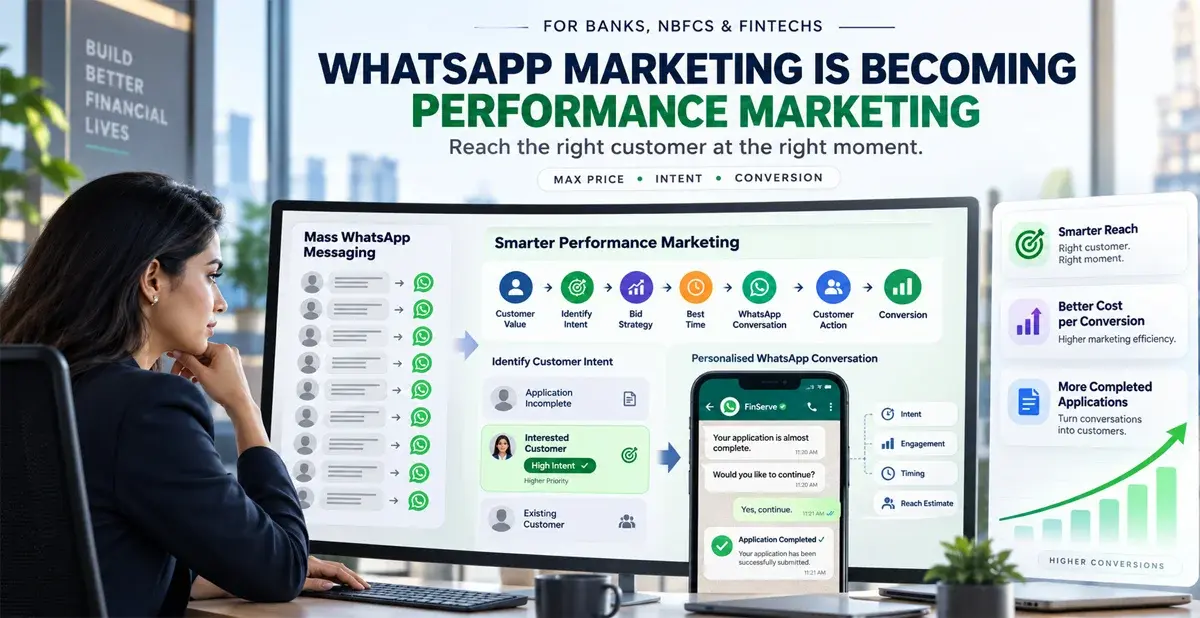
Businesses in e-commerce are already running this combined approach through WhatsApp chatbots for e-commerce India. Banking and financial services are seeing results from WhatsApp chatbots for banking. Retail brands are growing engagement with WhatsApp chatbots for retail customer engagement.
For industries like travel and tourism, AI WhatsApp automation is transforming how operators communicate with travellers. Even the automobile sector is seeing gains from WhatsApp Business integration for the automobile industry for lead follow-up and service reminders.
The healthcare sector is using this multi-channel AI approach for patient communication, and our guide on patient engagement with SMS and IVR in healthcare explains how hospitals and clinics are reducing no-shows and improving care outcomes.
You can also layer in RCS backed by SMS to ensure rich message delivery on all devices, and explore what business communication looks like in the AI era to understand the full strategic picture.
For businesses that have not yet built their WhatsApp bot, our step-by-step guide on how to make a WhatsApp bot is a good starting point. And if you are still losing leads that come in after office hours, read our piece on why businesses lose leads after office hours and what to do about it.
Explore more solutions on the Fonada website here: 👉 Fonada
Get in touch with us:
👉 Contact us: https://bit.ly/47OjrVH
👉 WhatsApp: https://wa.me/7479574795?text=
👉 Subscribe on LinkedIn: https://bit.ly/4pPuQL8
👉 Subscribe A DEMO: https://calendly.com/connect-fonada/30min
FAQs
The AI voice bot dials numbers from a campaign list automatically. When a call connects, it greets the person by name, delivers a personalised message or begins a two-way conversation using NLP, listens to the response, handles objections or questions, and logs the outcome. The entire process is autonomous and runs 24 hours a day without human involvement.
For repetitive, high-volume outbound tasks like reminders, surveys, notifications, and lead qualification, AI voice bots outperform human telecallers in speed, cost, and consistency. Human agents remain valuable for relationship-driven conversations and complex sales scenarios. The winning model is AI handling volume while humans handle depth.
Traditional IVR outbound blasts a pre-recorded message and records a keypress response. AI outbound calling is a two-way conversation. The AI listens, understands speech, handles real objections, and responds intelligently. This makes it far more effective for engagement, consent collection, and lead qualification than old IVR systems.
A cloud-based AI voice bot can make millions of outbound calls in a single day. Platforms like Fonada have successfully executed 25 lakh plus dial-outs within 24 hours by running tens of thousands of simultaneous call threads using auto-scaling cloud infrastructure. The upper limit scales with infrastructure, not with people.
Share
.gif "Side Bar Gif")
Subscribe To Our Newsletter
Get updates and learn from the best
Sep 22, 2026
AI Sales Agent for Travel Agencies: Convert More Travel Leads
Travel enquiries rarely arrive at a convenient time. A family may ask for a Kerala package at 10:30... Read More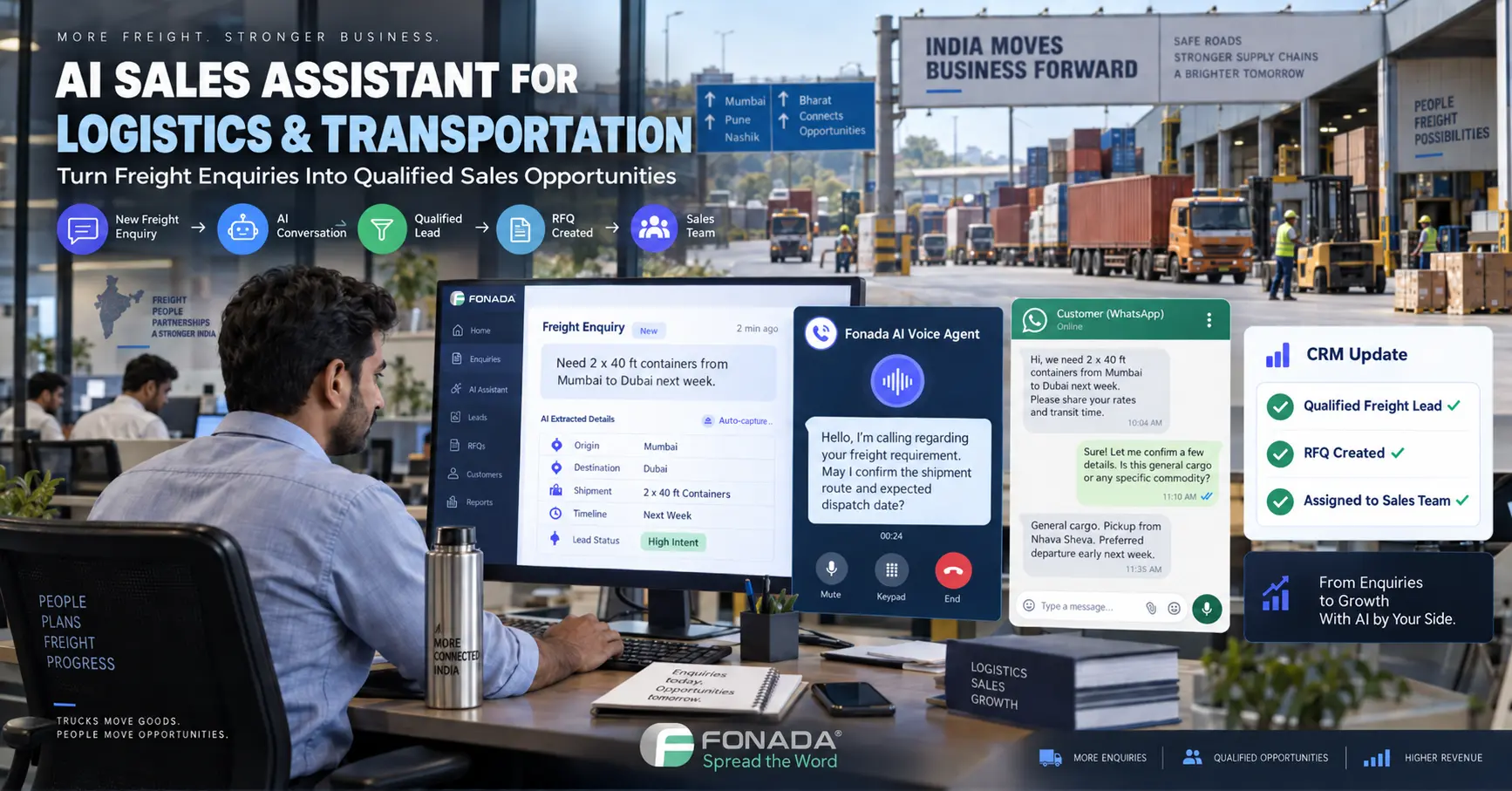
Sep 18, 2026
AI Sales Assistant for Logistics and Transportation
India’s logistics and transportation sector moves fast, but the sales process often does not.... Read More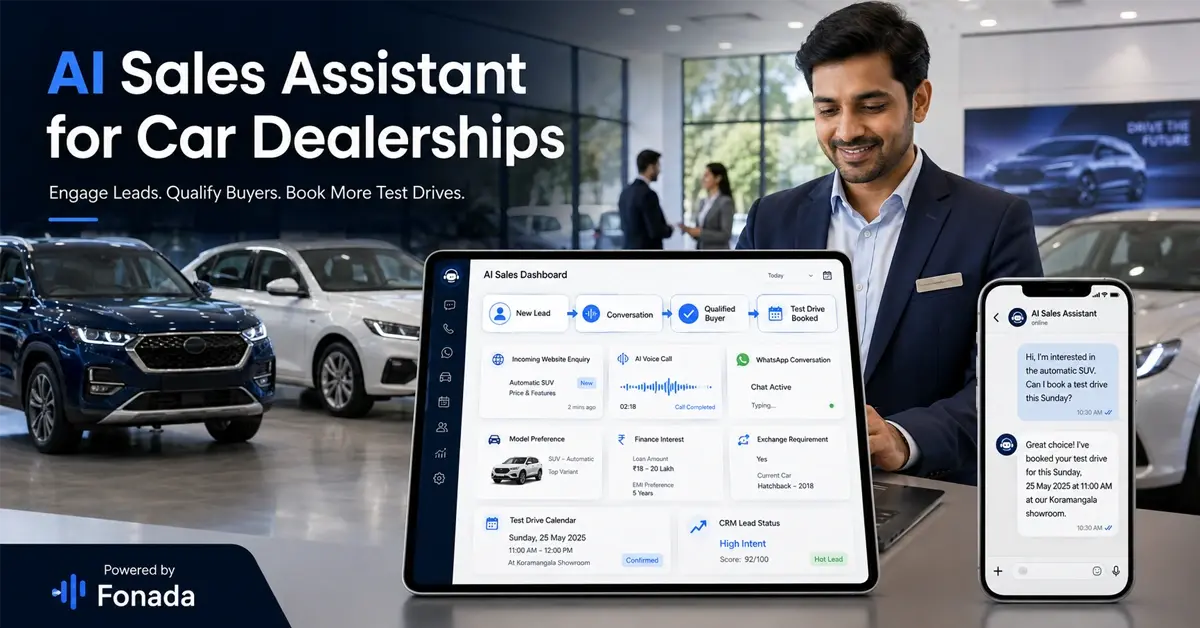
Sep 02, 2026
AI Sales Assistant for Car Dealerships: How AI Can Turn More Enquiries into Test Drives and Sales
Buying a car in India rarely starts at the showroom today. A customer... Read MoreLatest Updates
From Fonada
Industry Insights, Trends, Innovations, Updates, and Case Studies from Industry Experts
View
Customer
Reviews
Discover why our customers love us - read their authentic and heartfelt reviews!
View
Case
Studies
Explore real-life scenarios, offering analysis, and solutions to practical challenges
View
Convert Leads Into Sales With Fonada
Trusted CPaaS Solution Provider