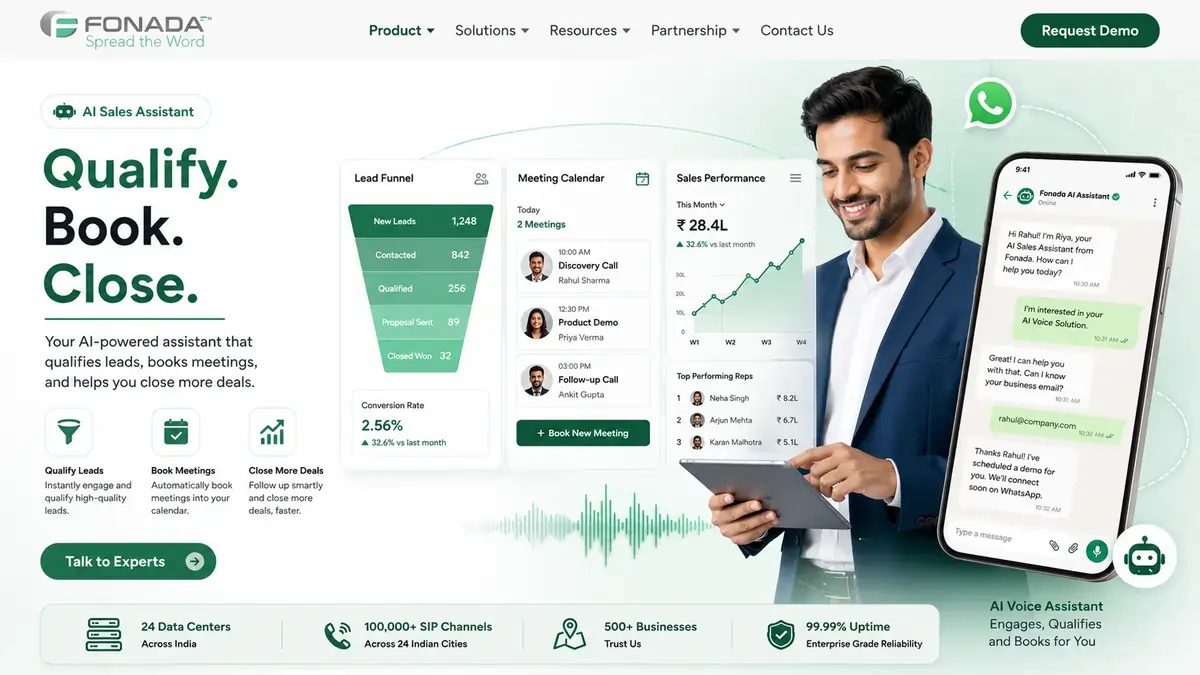
India’s logistics and transportation sector moves fast, but the sales process often does not. If nobody responds quickly, that opportunity can move to another logistics provider.
This is where an AI Sales Assistant for Logistics becomes useful.
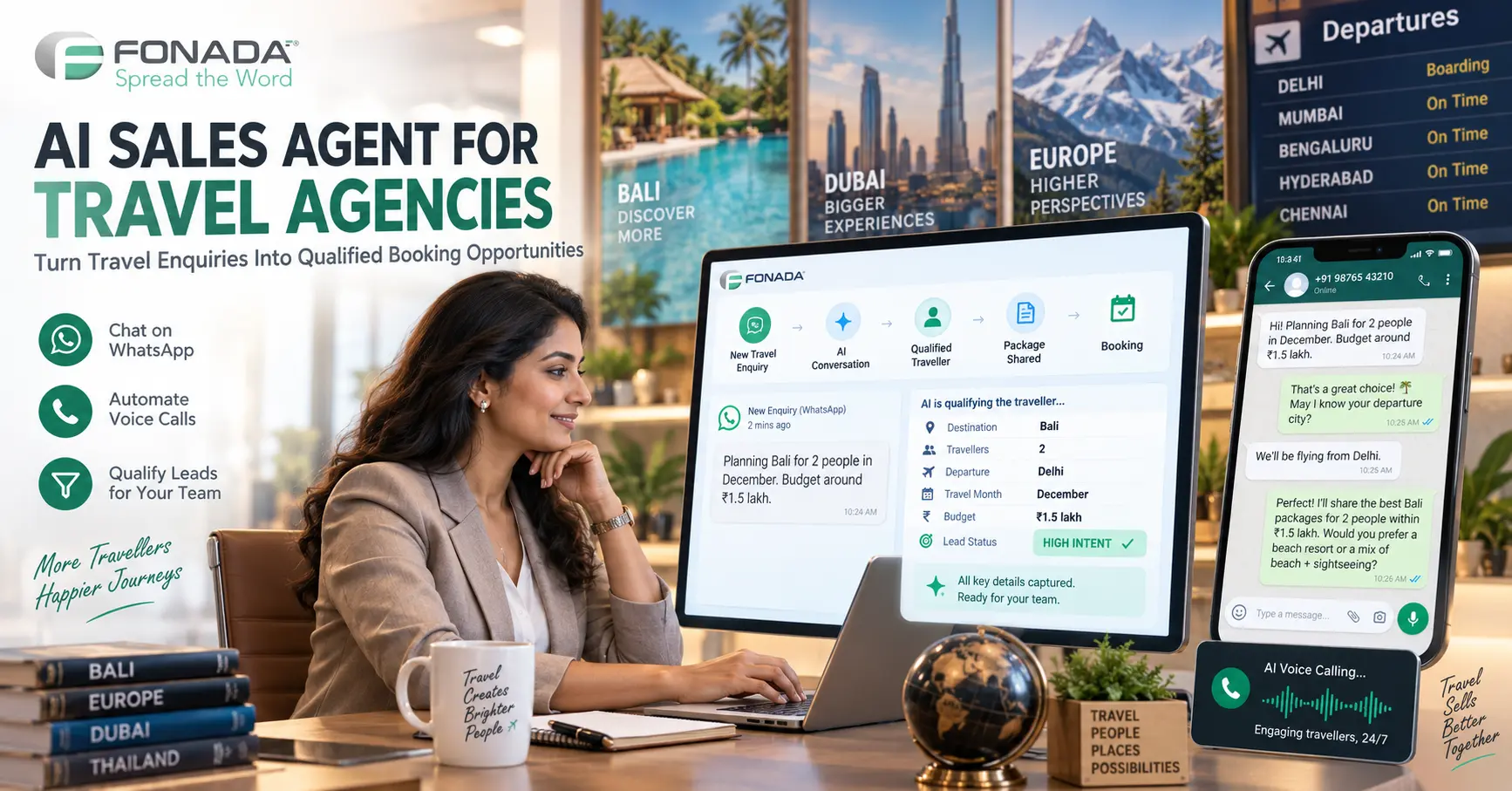
An AI sales assistant can respond to enquiries, ask qualifying questions, capture shipment requirements, make or receive calls, continue conversations on WhatsApp, schedule follow-ups, update CRM records, and hand serious opportunities to a sales executive. The goal is not to remove experienced salespeople. Logistics sales involves pricing, route knowledge, documentation, negotiation, relationships, and operational judgement. AI is better used to handle the repetitive first layer of communication so people can focus on the parts of a deal where human expertise matters.
What Is an AI Sales Assistant for Logistics?
An AI Sales Assistant for Logistics Companies is a conversational software system designed to support sales communication across channels such as phone calls, WhatsApp, website chat, SMS, and CRM workflows.
It can understand a customer enquiry, collect missing details, identify intent, record the conversation, trigger follow-ups, and route the opportunity to the right person.
Imagine a customer sends this message:
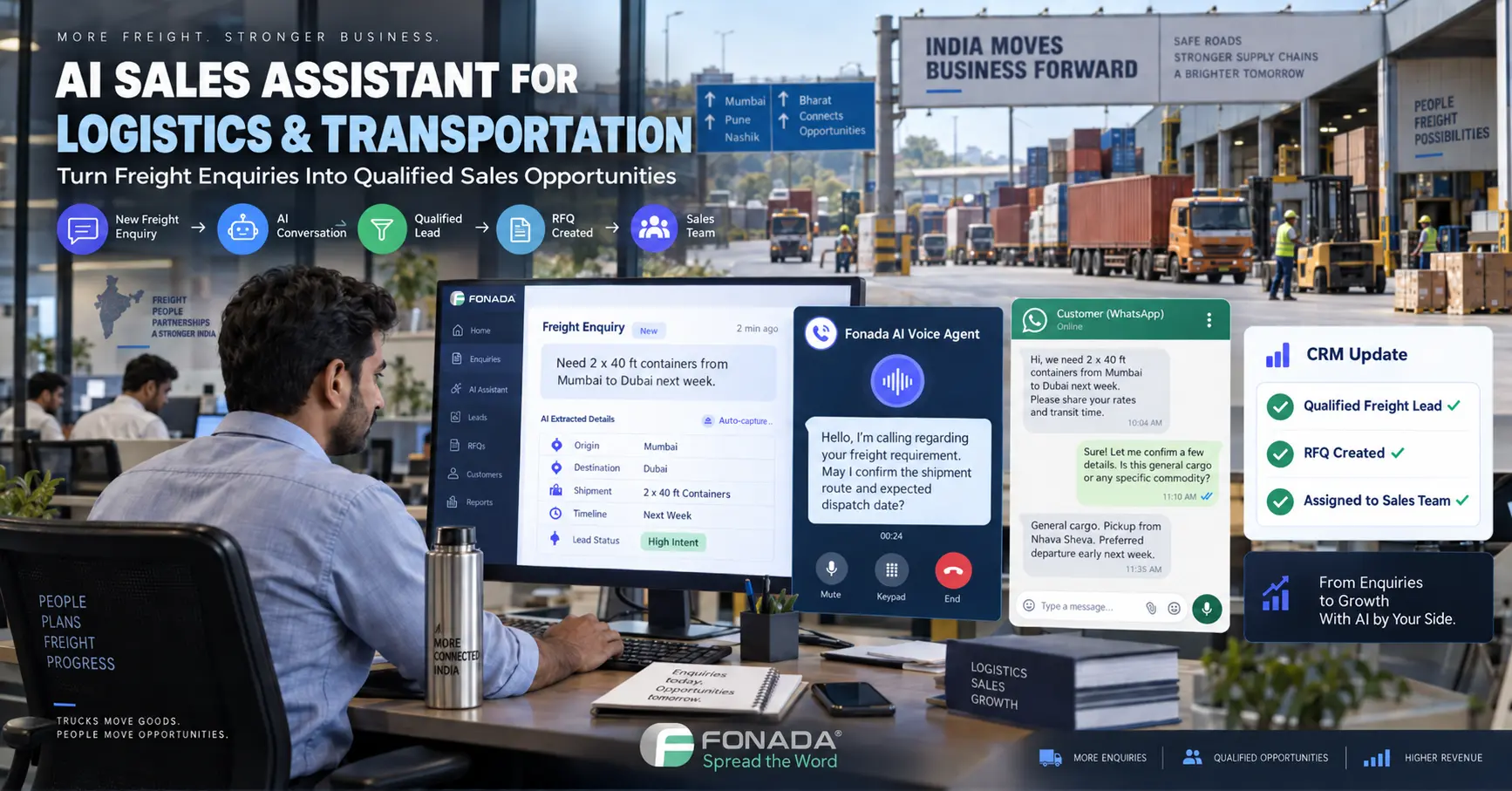
“Need a quote for two 40-foot containers from Mumbai to Dubai next week.”
A properly configured AI Sales Agent for Logistics can identify that this is a freight enquiry, capture the origin, destination, container requirement, expected date, and customer details, then create or update the lead inside the CRM. It can acknowledge the request immediately and alert the pricing or sales team.
If some information is missing, the assistant can ask for it before handing the enquiry to a person.
That is a more useful definition of AI Automation for Logistics than simply calling every chatbot “AI”. The system should understand a business workflow and move the enquiry towards the next meaningful action.
Why Logistics Sales Needs Faster Follow-Up
Logistics buying decisions are often time-sensitive. A customer asking for a freight quote usually has an active requirement. A transport buyer may need a vehicle for a route today. An importer may need rates for an upcoming shipment. A manufacturer may be comparing multiple 3PL providers.
The first challenge is therefore response speed.
The second challenge is completeness. A salesperson cannot prepare a useful freight proposal if the enquiry only says, “Send rate Mumbai to Delhi.” The team may still need cargo type, weight, volume, pickup date, delivery requirement, vehicle type, service level, and payment terms.
The third challenge is consistency. Salespeople are often managing new enquiries while also chasing quotations, speaking with operations, checking rates, meeting clients, and following older prospects.
An AI Sales Assistant for Logistics can support the repetitive work between these activities. It does not need to know every commercial decision. It needs to collect the right information, respond consistently, keep the conversation active, and involve a human at the right stage.
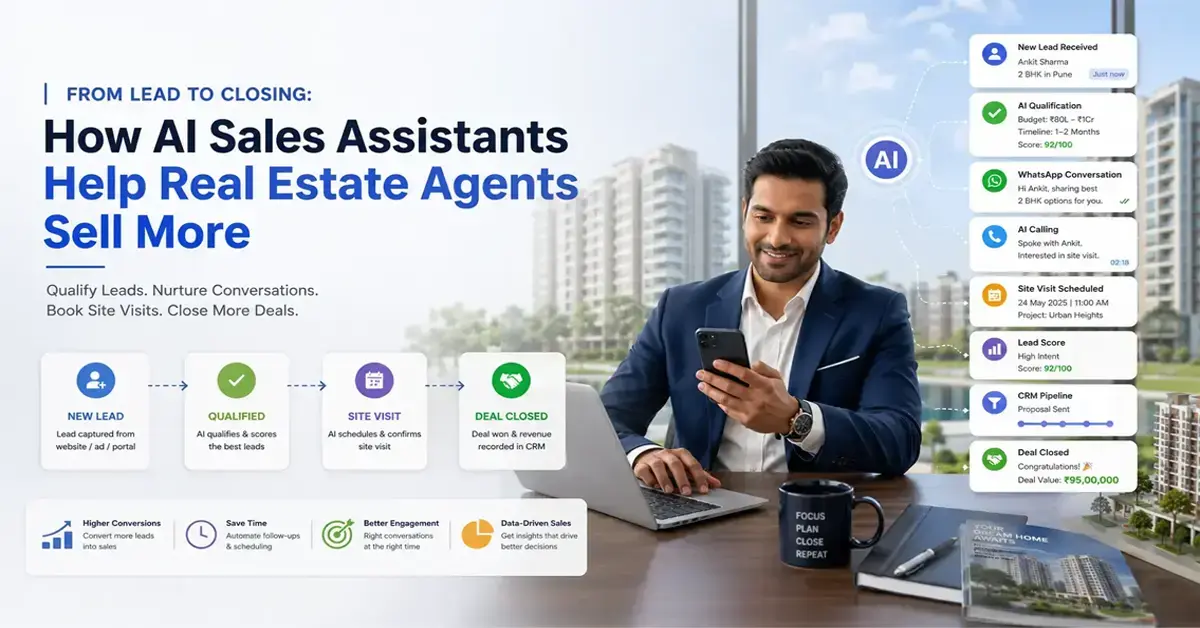
This is one reason AI sales assistants that qualify leads, book meetings, and support deal conversion are becoming relevant across industries.
How an AI Sales Assistant Works in a Logistics Sales Funnel
A well-designed AI Sales Assistant for Logistics can support the sales journey from the first enquiry to qualified handoff.
| Sales stage | What the AI assistant can do | Human role |
|---|---|---|
| New enquiry | Respond instantly on voice, WhatsApp, or web | Review exceptions |
| Qualification | Ask route, cargo, volume, timeline, service, and budget questions | Refine complex requirements |
| Lead scoring | Identify urgency and commercial intent | Validate strategic opportunities |
| RFQ capture | Structure shipment details for pricing | Prepare or approve commercial quote |
| Follow-up | Remind prospects about pending quotes or documents | Negotiate and build relationship |
| Meeting booking | Offer available time slots | Conduct detailed consultation |
| CRM update | Save notes, status, and conversation outcome | Use context for closing |
| Handoff | Transfer high-intent leads with a summary | Take ownership of the opportunity |
This is Logistics Sales Automation in practical terms. It reduces the gaps between enquiry, qualification, follow-up, and human action.
Businesses exploring the wider model can also read Fonada’s complete guide to AI sales agents.
AI for Logistics Is More Than Customer Support
Many companies first think about AI in Logistics as a customer support tool. Tracking updates, delivery questions, and basic service enquiries are obvious use cases. But sales creates another important opportunity.
An AI assistant can speak with a prospect before the pricing team becomes involved. It can separate a genuine commercial requirement from a vague enquiry. It can identify the service a prospect needs and gather enough information for a salesperson to continue intelligently.
This approach connects Artificial Intelligence in Logistics with revenue activity, not only operational efficiency.
Use Case 1: Freight Forwarder in Mumbai
Consider an illustrative freight forwarding company in Mumbai handling ocean and air freight enquiries.
With an AI Sales Assistant for Logistics, every new enquiry can receive an immediate acknowledgement. The assistant can ask for origin, destination, commodity, weight, dimensions, container requirement, incoterm, expected shipment date, and contact details.
Once the information is collected, the lead can be tagged as air freight, FCL, LCL, import, or export and assigned to the appropriate sales or pricing team.
For a freight forwarder, the value comes from creating an organised bridge between enquiry and quotation rather than letting requests remain scattered across channels.
Use Case 2: Road Transport Company in Delhi NCR
Now consider an illustrative transport company serving Delhi NCR, Jaipur, Ahmedabad, Mumbai, and other high-volume routes.
An AI Voice Agent for Transportation can answer the first call, collect pickup location, destination, vehicle requirement, material type, weight, dispatch date, and customer details.
The AI should not invent a transport rate if live pricing is unavailable. Instead, it can create a qualified enquiry and send the requirement to the responsible sales executive.
This combination of voice and messaging can reduce the dependence on manually copying enquiry details from calls into notebooks or spreadsheets.
Businesses evaluating call automation may also find Fonada’s guide on AI call centre voice bots useful.
Use Case 3: 3PL Provider Serving Indian Manufacturers
Consider an illustrative 3PL provider selling warehousing, transportation, and fulfilment services to manufacturers and consumer businesses.
It may ask about monthly shipment volume, storage requirement, cities served, SKU count, current logistics model, expected start date, and whether the customer needs transport, warehousing, or both.
The AI can then classify the opportunity. A business needing 50 pallet positions is different from a manufacturer looking for multi-city warehousing and nationwide distribution.
High-intent leads can be passed to an enterprise salesperson with a structured summary. This is where AI Lead Generation for Logistics becomes more useful than simple form capture.
Logistics Lead Generation With AI
Lead Generation for Logistics Companies usually involves multiple sources: Google Ads, organic search, IndiaMART-style marketplaces, referrals, trade events, outbound prospecting, website forms, email, and WhatsApp.
An AI Sales Assistant for Logistics can contact new leads quickly and ask questions that match the service being sold. It can also follow up consistently when the first attempt gets no response.
For freight lead generation, qualification questions may include route, shipment type, cargo, frequency, expected volume, and shipping date.
For transportation lead generation, the assistant may ask lane, vehicle type, loading date, cargo category, and monthly requirement.
For warehousing, it may ask location, space, pallet positions, inventory profile, and expected contract period.
A broader explanation of automated qualification is available in Fonada’s guide on how AI voice and WhatsApp can qualify leads.
AI Voice Agent for Logistics
An AI Voice Agent for Logistics can make outbound calls or handle inbound calls based on configured workflows. It can greet the caller, understand the purpose of the call, ask relevant questions, record responses, and transfer important conversations.
Possible sales workflows include:
- Calling a new website lead within a defined time window
- Reconnecting with prospects who requested quotations
- Confirming whether a customer still needs a vehicle or freight service
- Collecting missing information before quotation
- Booking a callback with the right salesperson
- Following up after a proposal has been shared
Fonada provides AI-powered voice bot solutions and communication infrastructure that can support automated customer conversations.
For very high-volume calling, it is also useful to understand how one AI voice bot handled 25 lakh calls in a day and how an auto dial software can support outbound operations.
WhatsApp Automation for Logistics Sales
WhatsApp is especially useful when a logistics conversation involves details that are easier to send than speak.
With appropriate workflows, WhatsApp automation can acknowledge enquiries, collect structured details, answer approved questions, schedule follow-ups, and notify salespeople.
Companies planning this channel can refer to Fonada’s bulk WhatsApp messaging guide and practical guide on how to make a WhatsApp bot.
Examples from other sectors are also useful because the underlying conversational patterns are similar. Fonada has resources on WhatsApp chatbots for ecommerce, banking, retail, and the automobile industry.
AI for Freight Forwarding and RFQ Management
AI for Freight Forwarding becomes particularly valuable at the RFQ stage.
AI can help standardise the first interaction.
A conversational assistant can request the missing fields, create a structured enquiry, and send the data to the pricing workflow. It can then keep the prospect informed while the team prepares the commercial offer.
After a quote is shared, the AI can schedule a follow-up instead of relying entirely on someone remembering to call.
The better model is AI for Freight Forwarders that handles information gathering and follow-up while specialists retain control of pricing and negotiation.
AI for Transportation Companies
AI for Transportation can support both commercial and communication workflows.
Fonada already supports logistics communication use cases through automated calls, chatbots, voicebots, IVR, auto dialling, SMS, and integrations. Companies that need structured call routing can explore Fonada call centre IVR and its guide to IVR software for startups and SMEs.
Where Generative AI Fits and Where It Should Not
Logistics businesses need boundaries for generative AI.
An AI assistant should not make up freight rates, delivery commitments, service coverage, customs information, or contractual terms. It should use approved data sources and escalate when information is unavailable or commercially sensitive.
Connecting AI With CRM and Existing Systems
An AI platform for logistics becomes more valuable when conversations do not remain trapped inside the communication tool.
A qualified enquiry should ideally create or update a CRM record. Call outcomes, WhatsApp responses, lead status, follow-up dates, and meeting details should be available to the sales team.
If the lead first speaks with an AI Calling Agent for Logistics and later reaches a human salesperson, the salesperson should not ask every question again. The handoff should include the context already collected.
Fonada positions its communication services around integrations with CRM, SMS, WhatsApp, and enterprise systems. Its overview of business communication explains why connected channels matter.
Choosing the Right AI Sales Assistant for Logistics Companies
The right solution should fit the way your sales team already works. Start by checking whether the platform can support the channels your customers actually use, such as voice calls, WhatsApp, web chat, SMS, or RCS. It should also connect with your CRM or other business systems so that conversation data does not remain trapped inside a separate dashboard.
Next, look at qualification flexibility. A freight forwarder, road transporter, courier company, and 3PL provider will not ask the same questions. The AI should allow different workflows based on service type, geography, lead source, shipment profile, and customer intent.
Language support also matters in India. Your prospects may speak English, Hindi, Hinglish, or regional languages. A useful AI Sales Agent for Logistics should handle natural conversation without forcing every customer into one rigid script.
For voice automation, check call quality, latency, transfer logic, recording controls, reporting, and escalation. For WhatsApp automation, review how the system manages approved templates, inbound replies, human handover, and CRM updates.
Security and access controls are equally important. Customer details, shipment information, commercial requirements, and call records should be handled according to your organisation’s policies and applicable regulations.
Finally, judge the platform by business outcomes rather than by how impressive the demo sounds. Ask whether it can improve lead response, increase qualification coverage, reduce missed follow-ups, organise RFQs, and help salespeople spend more time on serious opportunities.
A good AI Sales Assistant for Logistics should make the sales process simpler for both the customer and the team. If the automation adds unnecessary steps, creates confusion, or hides context from human agents, it is not doing its job.
Before deployment, test the assistant with real enquiry examples from your sales team, because realistic testing exposes missing fields, confusing questions, and weak escalation rules early.
Human Salespeople Still Matter
AI cannot replace judgement and accountability required in complex logistics negotiations.
The best use of AI Sales Assistant for Logistics Companies is to remove repetitive work around first response, initial qualification, reminders, data entry, and routine follow-up.
Human salespeople can then spend more time understanding the customer’s network, solving commercial problems, negotiating, and building trust.
How to Implement AI Automation for Logistics
Start with one measurable workflow.
A freight forwarder may begin with inbound RFQ qualification. A road transporter may begin with missed-call follow-up. A 3PL business may begin with website lead qualification. A courier company may begin with inbound voice enquiries.
Define the questions the assistant should ask, the data it is allowed to use, the conditions for human escalation, and the next action after each outcome.
Test real Indian conversation patterns. Customers may use English, Hindi, Hinglish, abbreviations, route names, and industry shorthand. The workflow should be able to handle realistic conversations without forcing people through an unnatural script.
Metrics to Track
Do not judge AI Automation for Logistics only by the number of calls or messages completed.
Track business outcomes such as response time, percentage of leads contacted, qualification rate, quote requests captured, meetings booked, follow-up completion, quote-to-order conversion, and salesperson time saved.
These metrics show whether Logistics Sales Automation is actually improving the sales process.
For customer-facing automation more broadly, Fonada’s guide to customer service software provides useful context.
Why Fonada for Logistics Sales Communication
Fonada provides cloud communication and AI-enabled solutions across voice, chatbots, WhatsApp, SMS, IVR, and related business communication workflows.
A prospect may fill a web form, receive an AI call, continue the conversation on WhatsApp, speak with a human sales executive, and later receive reminders or updates.
Fonada can help businesses connect these communication points while using AI-powered bots for support and lead generation.
Companies can explore Fonada or request a Fonada demo to discuss a workflow based on their lead sources, sales process, and communication channels.
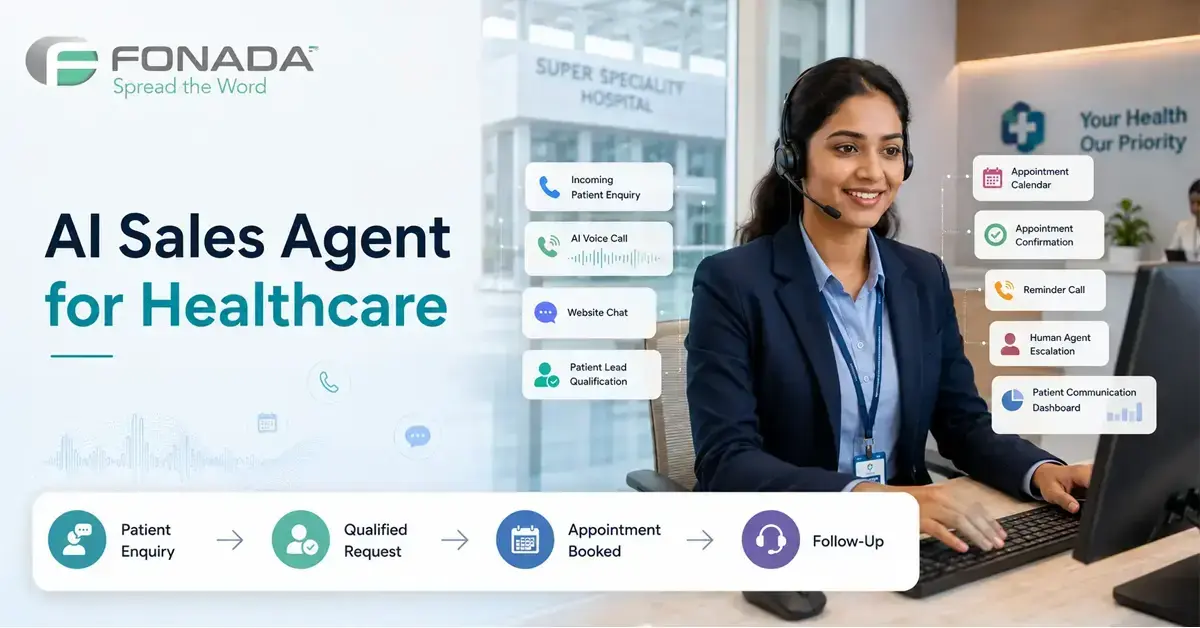
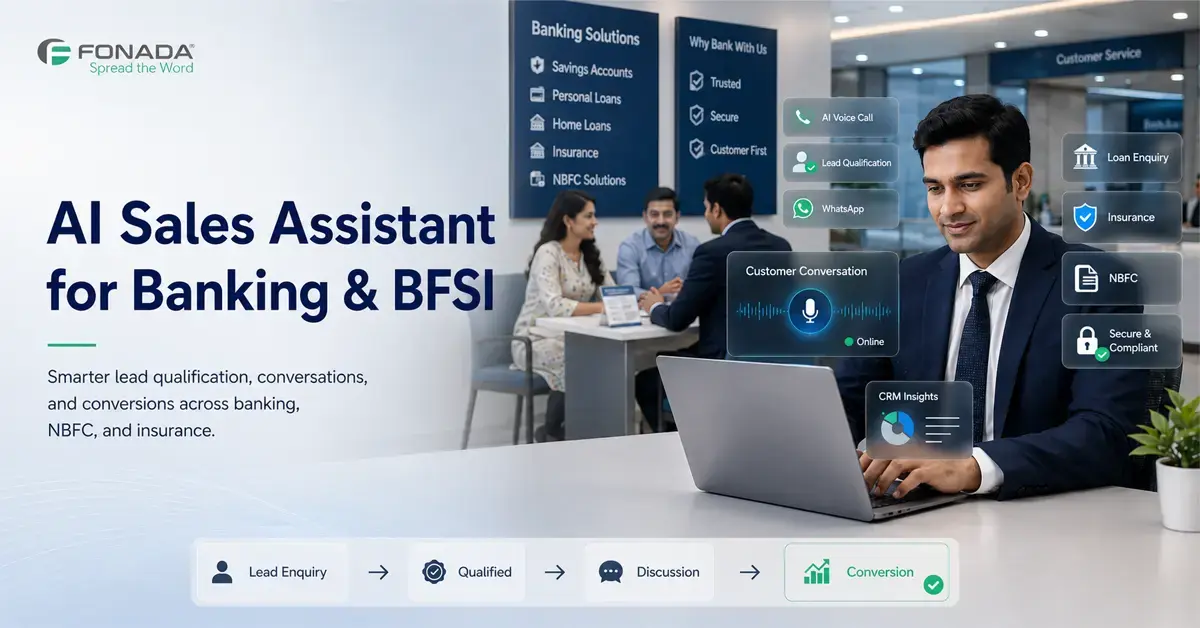
These include AI Sales Assistants for car dealerships, WhatsApp automation for real estate lead generation, AI voice bots for real estate lead generation, and healthcare engagement using SMS and IVR.
Businesses planning omnichannel journeys can also learn about RCS backed by SMS, handling large ecommerce query volumes with AI, and stopping leads from getting lost after business hours.
Final Thoughts
The biggest opportunity for AI in Logistics is not to make every decision automatically. It is to make sure good opportunities move faster.
An AI Sales Assistant for Logistics can respond when your team is busy, ask the basic questions every salesperson asks, keep track of follow-ups, organise lead information, and involve a person when the conversation becomes commercially important.
For Indian freight forwarders, transportation companies, 3PL providers, courier businesses, and logistics operators, that can create a cleaner sales process without removing the human relationships the industry depends on.
When voice, WhatsApp, CRM, and human sales teams work together, AI Sales Assistant for Logistics Companies becomes more than a chatbot. It becomes a practical sales coordination layer that helps the business respond faster, qualify better, and give serious prospects the attention they deserve.
That is where platforms such as Fonada can add value. Instead of treating calls, messages, bots, and follow-ups as separate tools, businesses can build a connected communication journey and make AI part of the way their sales team actually works.
Explore more solutions on the Fonada website here: 👉 Fonada
Get in touch with us:
👉 Contact us: https://bit.ly/47OjrVH
👉 WhatsApp: https://wa.me/7479574795?text=
👉 Subscribe on LinkedIn: https://bit.ly/4pPuQL8
👉 Subscribe A DEMO: https://calendly.com/connect-fonada/30min
FAQs
AI can help logistics companies respond to new enquiries faster, contact more leads, collect structured requirements, automate follow-ups, and identify high-intent prospects. It improves the handling of existing demand and makes it less likely that genuine enquiries are forgotten or left unanswered.
Yes. AI lead qualification can collect details such as origin, destination, cargo type, weight, volume, service requirement, expected shipment date, and contact information. Complex pricing or commercial decisions should still be escalated to the appropriate logistics professional.
An AI Voice Agent for Logistics can answer or place calls, ask predefined qualification questions, understand customer responses, record outcomes, schedule callbacks, and transfer suitable conversations to human teams.
Yes. WhatsApp can support enquiry acknowledgement, qualification, document collection, quote follow-up, reminders, and salesperson handoff. Businesses should use appropriate WhatsApp Business processes and ensure their communication follows applicable consent, template, and messaging requirements.
Yes. AI for Freight Forwarding can help structure RFQs, collect missing shipment information, classify enquiries, trigger internal tasks, follow up after quotations, and maintain conversation history. It works best when pricing and operational decisions remain connected to verified systems and human expertise.
Logistics selling involves negotiation, relationships, pricing judgement, service design, and exception handling. AI is most useful for repetitive communication, lead qualification, follow-up, and administrative tasks.
Choose one workflow with a clear business problem, such as slow response to freight enquiries or inconsistent quote follow-up. Define the questions, escalation rules, channels, and success metrics. Run a controlled pilot, review real conversations, and expand only after the workflow performs reliably.
An AI Sales Assistant for Logistics is a conversational software system that helps logistics businesses respond to leads, ask qualification questions, capture shipment requirements, follow up, update sales records, and route high-intent opportunities to human salespeople through channels such as voice, WhatsApp, and web chat.
Share
.gif "Side Bar Gif")
Subscribe To Our Newsletter
Get updates and learn from the best
Sep 18, 2026
AI Sales Assistant for Logistics and Transportation
India’s logistics and transportation sector moves fast, but the sales process often does not.... Read More
Sep 02, 2026
AI Sales Assistant for Car Dealerships: How AI Can Turn More Enquiries into Test Drives and Sales
Buying a car in India rarely starts at the showroom today. A customer... Read More
Sep 01, 2026
AI Sales Agent for Education: Convert More Enquiries
It is admission season. Your phone will not stop ringing. Your WhatsApp Business number has forty un... Read MoreLatest Updates
From Fonada
Industry Insights, Trends, Innovations, Updates, and Case Studies from Industry Experts
View
Customer
Reviews
Discover why our customers love us - read their authentic and heartfelt reviews!
View
Case
Studies
Explore real-life scenarios, offering analysis, and solutions to practical challenges
View
Convert Leads Into Sales With Fonada
Trusted CPaaS Solution Provider