Blog
How AI Agents Are Transforming the Healthcare Call Center in 2026
October 14, 2026
6 min read
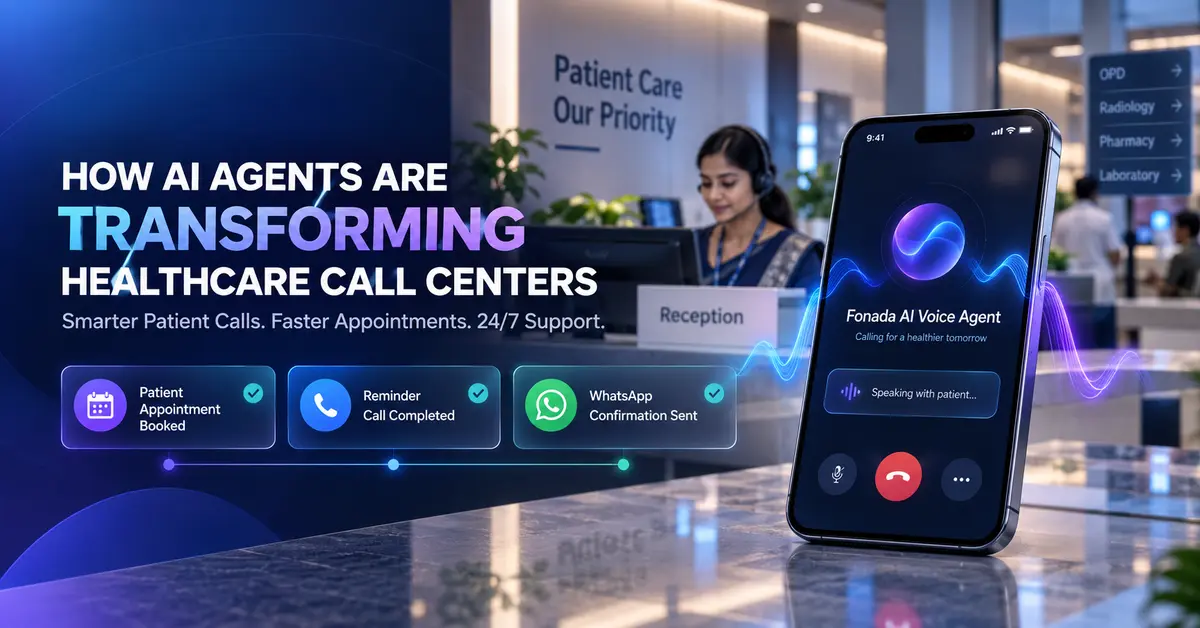
Imagine a patient calling a hospital to book an appointment. The phone keeps ringing. The receptionist is already handling three patients at the counter. After waiting, the caller disconnects and tries another hospital.
This is a common challenge for busy healthcare facilities.
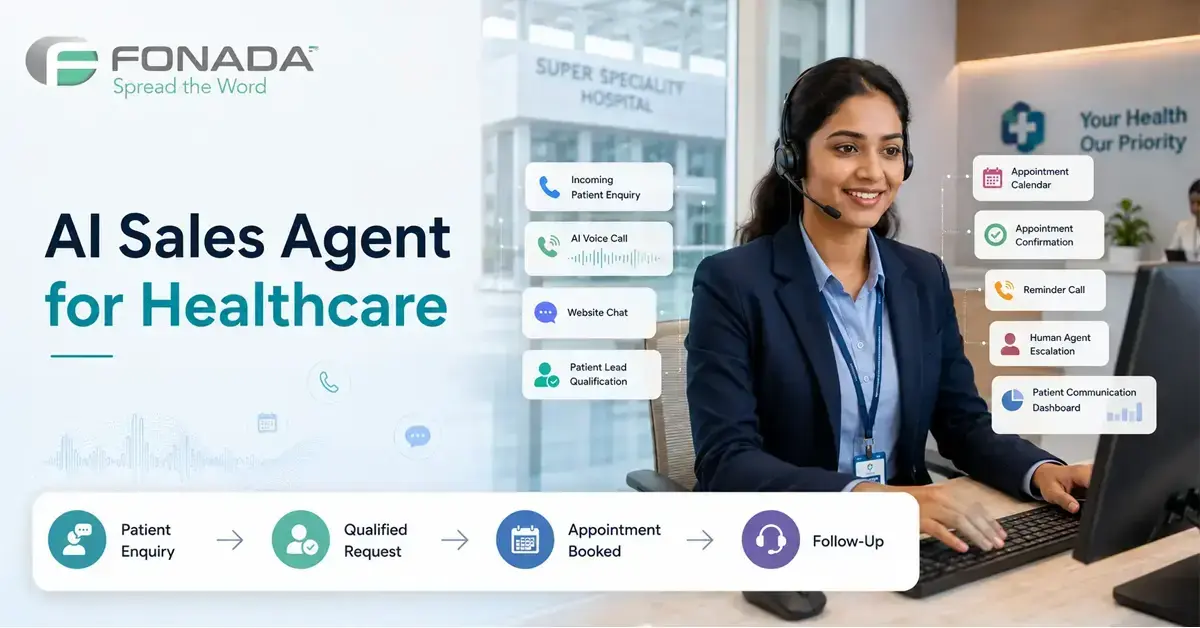
AI Agents for Healthcare are intelligent software assistants that handle routine patient conversations, automate appointment bookings, answer common enquiries and manage follow-ups through voice and digital channels. They help healthcare organisations offer more accessible support while allowing medical and administrative teams to focus on patients who need personal attention.
From hospitals in Delhi to diagnostic centres in smaller Indian cities, AI-powered communication is creating new opportunities to improve patient services.
But how does it actually work?
What Are AI Agents for Healthcare?
AI Agents for Healthcare are software systems designed to understand patient requests, respond conversationally and complete approved administrative tasks.
Unlike traditional automated phone systems, modern AI agents can understand everyday language and guide patients through conversations.
For example, a patient might say:
"I need to book a blood test for tomorrow morning."
An AI agent connected to the appropriate booking system can check availability, ask for necessary details and help arrange an appointment.
The patient does not need to navigate complicated phone menus.
These systems combine technologies such as speech recognition, natural language processing, text-to-speech and workflow automation.
Healthcare AI agents are commonly used for:
-
Appointment booking and rescheduling
-
Automated patient follow-up
-
Hospital enquiry management
-
Appointment confirmations and reminders
-
Billing and insurance enquiry routing
-
Inbound and outbound patient communication
Importantly, administrative AI agents should not replace doctors, nurses or qualified medical professionals when clinical judgement is required.
Why Are Healthcare Call Centers Adopting AI?
Healthcare communication teams handle different types of requests throughout the day.
Some callers need directions to a hospital. Others want to confirm appointments, check consultation charges or understand the availability of specialists.
When all these enquiries reach the same reception team, service can become slow.
1. High Volumes of Patient Calls
Hospitals and diagnostic centres often experience heavy call traffic during peak hours.
Patients may contact the same department repeatedly when previous calls remain unanswered.
Healthcare call center automation helps manage routine calls without requiring staff to personally answer every enquiry.
2. Limited Availability Outside Working Hours
Patients do not always call during business hours.
Someone may remember an upcoming appointment late at night or want to enquire about a diagnostic test on Sunday.
AI Voice Agents for Healthcare can provide automated assistance around the clock, subject to configured operating rules.
3. Repetitive Administrative Work
Receptionists frequently answer similar questions about appointment timings, doctor availability, locations and booking procedures.
Automating these conversations can free staff for complex enquiries and in-person patient support.
4. Missed Appointments and Follow-Ups
When appointment reminders are handled manually, busy teams may struggle to reach everyone.
Automated patient communication can make reminder and confirmation workflows more consistent.
How Do AI-Powered Healthcare Call Centers Work?
An AI-Powered Healthcare Call Center combines conversational technology with hospital communication processes.
The system typically follows five steps.
Step 1: Receive the request
A patient calls the hospital or contacts an approved digital channel.
Step 2: Understand the conversation
Speech recognition converts spoken words into text. The AI identifies whether the patient wants an appointment, directions or another service.
Step 3: Access authorised information
When integrated with hospital software, the system can retrieve relevant information such as appointment availability or approved service details.
Step 4: Complete the workflow
Depending on its permissions, the AI can create a booking, record a callback request or initiate a reminder.
Step 5: Escalate when necessary
If the request requires medical advice, involves sensitive information or cannot be completed safely, the system directs the patient to appropriate staff.
A successful deployment depends on reliable integrations, clear instructions and well-designed escalation rules.
AI Healthcare Call Center vs Traditional Call Center
|
Feature |
Traditional Call Center |
AI-Powered Healthcare Call Center |
|---|---|---|
|
Routine enquiries |
Primarily handled by staff |
Eligible enquiries automated |
|
Availability |
Depends on staffing |
Can support 24/7 enquiries |
|
Appointment reminders |
Manual or scheduled campaigns |
Automated conversational workflows |
|
Multiple simultaneous calls |
Limited by available agents |
Depends on platform capacity |
|
Languages |
Depends on staff skills |
Depends on configured language support |
|
Complex patient issues |
Human staff |
Human escalation required |
|
System updates |
Manual or software assisted |
Possible through approved integrations |
The objective is not to eliminate human interaction. It is to make sure human teams spend more time on conversations where their experience and judgement matter most.
Key Benefits of AI Voice Agents for Healthcare
Faster Patient Responses
Long waiting times create frustration, especially when patients are already concerned about their health.
AI Call Center Agents can immediately respond to supported enquiries without placing every caller in a queue.
Better Appointment Management
AI Appointment Scheduling makes it easier to manage booking requests, confirmations, cancellations and available time slots.
When connected to a scheduling system, AI can help reduce manual coordination.
Reduced Administrative Pressure
Healthcare Customer Service Automation removes repetitive tasks from reception teams.
Employees can concentrate on registration issues, elderly patients, complicated enquiries and visitors requiring personal assistance.
More Consistent Communication
Approved scripts and verified information sources help AI agents provide consistent responses about hospital services and procedures.
However, organisations must regularly review knowledge sources to prevent outdated or inaccurate information.
Improved Operational Visibility
Call outcomes, booking requests and escalation records can provide useful insights into communication performance.
Healthcare managers can use these insights to identify problems and improve workflows.
Practical Healthcare AI Use Cases in India
The following examples are illustrative workflows, not claims about actual Fonada customer deployments.
Use Case 1: Appointment Booking at a Multi-Speciality Hospital
Consider a hospital in Delhi receiving enquiries for cardiology, orthopaedics and general medicine.
A patient calls after reception hours.
Patient: "I want an appointment with a cardiologist tomorrow."
AI Agent: "Certainly. Would you prefer a morning or evening appointment?"
Patient: "Morning."
AI Agent: "I can check the available slots. May I have your name?"
The system checks the connected appointment calendar and proceeds according to hospital booking rules.
If the booking is completed, a confirmation can be sent through an authorised communication channel.
The patient receives a convenient booking experience without waiting for the reception desk to reopen.
Use Case 2: Diagnostic Centre Appointment Reminders
Imagine a diagnostic chain in Mumbai managing appointments across multiple branches.
Manually calling every patient to confirm appointments requires substantial staff effort.
With Automated Appointment Reminders, an AI agent can contact patients before their scheduled visits.
The conversation might sound like this:
"Hello, this is an appointment reminder from your diagnostic centre. Are you confirming your visit tomorrow?"
Patients can confirm, request rescheduling or ask for assistance.
The system records the response and sends unresolved requests to the relevant team.
This allows employees to prioritise appointments requiring attention.
Use Case 3: Patient Follow-Ups at a Healthcare Clinic
Consider a clinic in Bengaluru managing routine follow-up appointments.
Previously, staff members called patients individually to remind them about scheduled reviews.
With Automated Patient Follow-Up, the clinic can create approved calling workflows.
Patients receive a reminder, confirm their availability or request a callback.
If a patient reports worsening symptoms or asks for treatment advice, the system should promptly direct the conversation to qualified healthcare professionals.
This distinction keeps administrative automation separate from clinical care.
Use Case 4: Handling Calls at a Pathology Laboratory
A pathology laboratory may receive repeated enquiries about test availability, collection timings, branch locations and report delivery processes.
A Healthcare Voice Bot can answer approved questions using verified laboratory information.
For requests involving confidential reports, identity verification and secure access become essential.
The laboratory can reduce repetitive conversations while maintaining appropriate safeguards for personal information.
How Does Conversational AI Improve Patient Engagement?
Patient engagement involves helping people stay informed and connected throughout their healthcare journey.
Conversational AI in Healthcare makes routine communication more accessible through natural interactions.
Instead of only sending one-way notifications, organisations can create workflows that allow patients to respond.
For example, a patient might receive an appointment reminder through WhatsApp and request a different time.
Where the hospital has configured the required integrations, the request can enter its rescheduling process.
Combining voice communication with approved messaging channels also helps reach patients with different preferences.
Fonada discusses related communication methods in its guide to healthcare patient engagement using SMS and IVR.
What Is Agentic AI in Healthcare?
Agentic AI in Healthcare refers to systems capable of pursuing defined tasks through multiple steps rather than simply producing a conversational response.
For example, an ordinary chatbot might explain how appointment booking works.
An agentic system, with appropriate permissions, could check an available slot, collect booking information, submit the request and provide confirmation.
The difference lies in the ability to take authorised actions within a workflow.
These capabilities require additional safeguards.
Healthcare organisations should limit system permissions, maintain activity records and require human intervention when a request falls outside approved boundaries.
How Can Fonada Support Healthcare Communication?
Fonada provides business communication and AI automation solutions that can be applied to routine healthcare engagement workflows.
Hospitals and diagnostic centres can explore the use of AI Voice Agents, calling automation and WhatsApp communication for patient-facing administrative processes.
Potential applications include appointment enquiries, patient reminders, callback requests and follow-up communication.
Fonada's AI call center and voice bot guide explains how conversational calling systems differ from traditional operations.
For facilities currently relying on telephone menus, the Fonada IVR guide provides useful background.
Healthcare organisations should confirm supported integrations, language options, access controls and deployment requirements before implementation.
The objective should be simple: automate repetitive communication while preserving trust, privacy and human support.
Want to explore an AI Voice Agent for your healthcare organisation? Request a Fonada demo.
What Should Hospitals Check Before Implementing AI?
Introducing healthcare workflow automation requires more than selecting a voice platform.
Start by identifying the most common administrative enquiries. Appointment reminders and basic booking questions may be practical starting points.
Next, review the hospital's existing appointment software, CRM and communication processes. An AI agent should work with these systems rather than create disconnected records.
Language support is particularly important in India. Patients may prefer Hindi, English or regional languages depending on their location.
Hospitals should also establish clear escalation rules, test recognition accuracy and check whether patients can easily reach a human employee.
Finally, evaluate performance using practical measurements such as call completion, appointment confirmation, successful handoffs, patient complaints and time saved by staff.
Begin with a limited pilot before expanding automation to additional departments.
How Should Healthcare AI Protect Patient Data?
Patient privacy must remain a central consideration.
India's Digital Personal Data Protection Act, 2023 and the notified Digital Personal Data Protection Rules, 2025 establish a framework for handling digital personal data, with phased commencement provisions. Healthcare organisations should review the requirements applicable to their deployment.
Before launching automated patient communication, organisations should establish appropriate safeguards for consent or other lawful processing grounds, access permissions, retention, security and patient information.
Avoid exposing confidential medical details through unsecured messages.
Clinical concerns must receive appropriate human attention. The World Health Organization also emphasises human autonomy, safety and accountability in healthcare AI.
The Future of Healthcare Call Center Automation
Healthcare communication is gradually moving beyond disconnected phone calls and manual registers.
Future systems may bring appointment management, communication history and patient service requests into more connected workflows.
For Indian healthcare providers, the greatest opportunity is not simply replacing traditional calling systems.
It is improving the everyday experience of patients while helping employees manage their workload.
Hospitals that introduce AI carefully, monitor performance and maintain reliable human support will be better positioned to benefit.
Key Takeaways
-
AI agents can automate routine appointment enquiries, reminders and administrative follow-ups.
-
Hospital call center automation can reduce repetitive manual work.
-
Integration with scheduling systems is essential for reliable booking workflows.
-
Human escalation remains necessary for clinical, complex and sensitive situations.
-
Patient privacy, consent and communication accuracy should guide implementation.
-
Fonada can be evaluated for voice and messaging workflows that support healthcare administration.
Conclusion: Better Communication Starts with Smarter Workflows
Every patient deserves a clear response, whether they call during a busy morning or after normal working hours.
AI Agents for Healthcare offer a practical way to improve routine communication without expecting receptionists to handle every enquiry manually.
The strongest approach combines automation for predictable tasks with personal attention whenever patients need additional help.
For hospitals, clinics and diagnostic centres, the next step is to identify one repetitive communication process and evaluate whether AI can improve it safely.
Explore how Fonada can support your patient communication workflows. Book a Fonada AI demo.
FAQs
Yes, properly configured AI voice agents can answer supported enquiries outside regular working hours, subject to service availability and hospital policies.
Automated reminders and confirmation workflows can help patients remember appointments and communicate scheduling changes. Actual improvements depend on deployment and patient behaviour.
Yes. Smaller clinics can begin with simple applications such as appointment enquiries and reminder calls before considering broader automation.
Some AI platforms support integration with scheduling, CRM or hospital management systems through suitable APIs. Compatibility and permissions must be verified.
Security depends on the provider, deployment configuration and organisational safeguards. Hospitals should evaluate privacy practices, access controls, data handling and applicable legal requirements before implementation.
Hospitals can identify a suitable communication workflow, discuss their requirements with Fonada and request a demonstration to evaluate available automation capabilities.
AI agents are software assistants that understand patient requests and perform approved tasks such as appointment booking, reminders and routine enquiry handling.
Share
.gif "Side Bar Gif")
Subscribe To Our Newsletter
Get updates and learn from the best
Sep 28, 2026
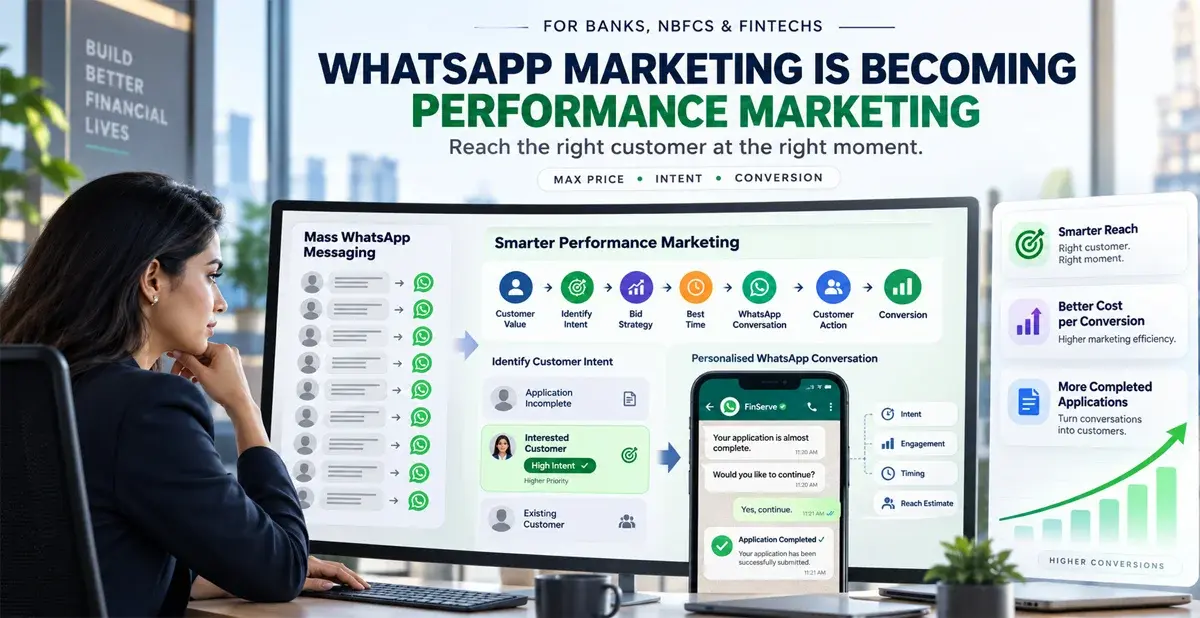
WhatsApp Marketing Bidding for Fintech in India: Meta Max Price, Timing & Delivery Guide (2026)
Meta is moving WhatsApp marketing beyond a fixed-price messaging model... Read More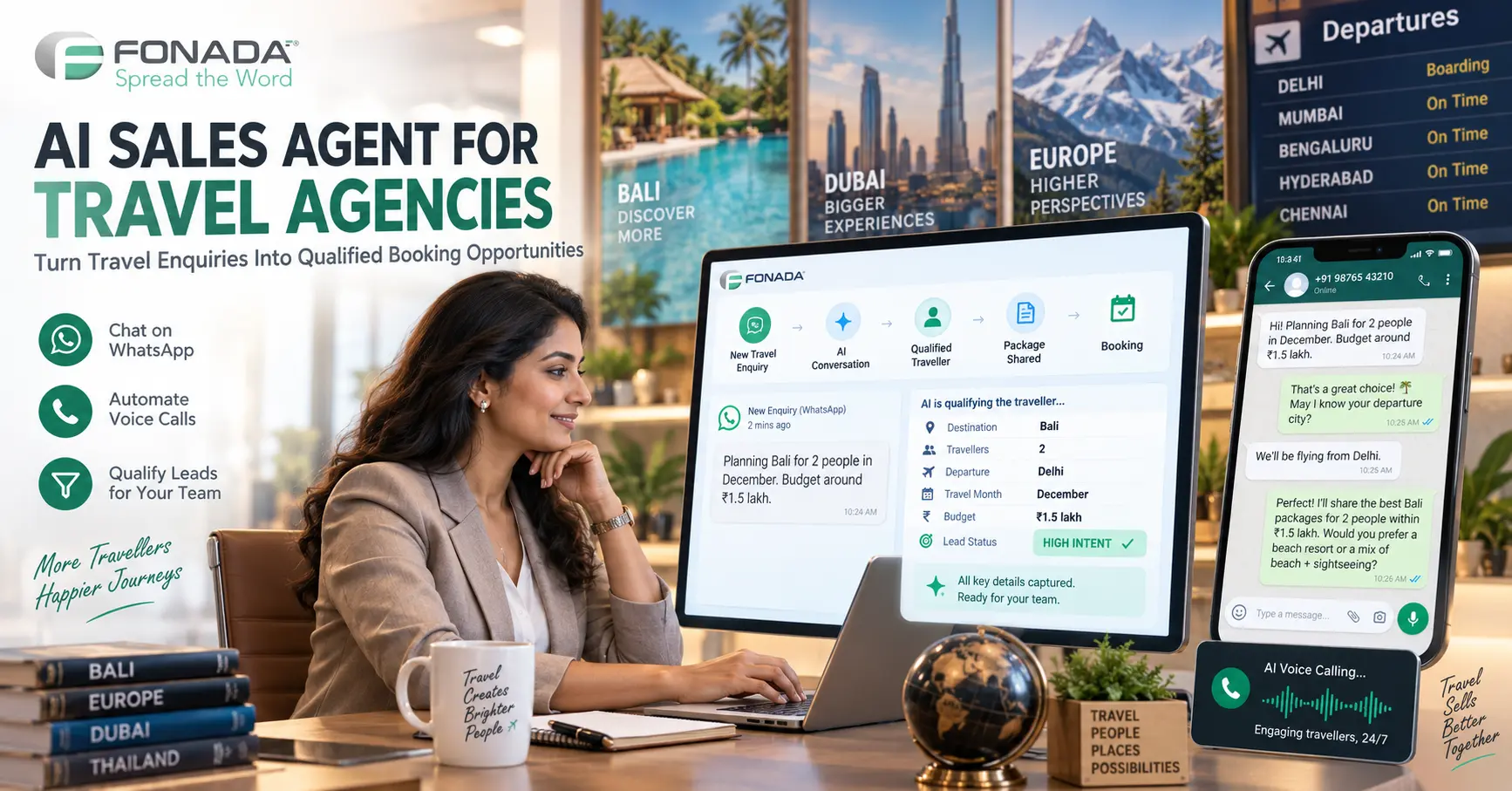
Sep 22, 2026
AI Sales Agent for Travel Agencies: Convert More Travel Leads
Travel enquiries rarely arrive at a convenient time. A family may ask for a Kerala package at 10:30... Read More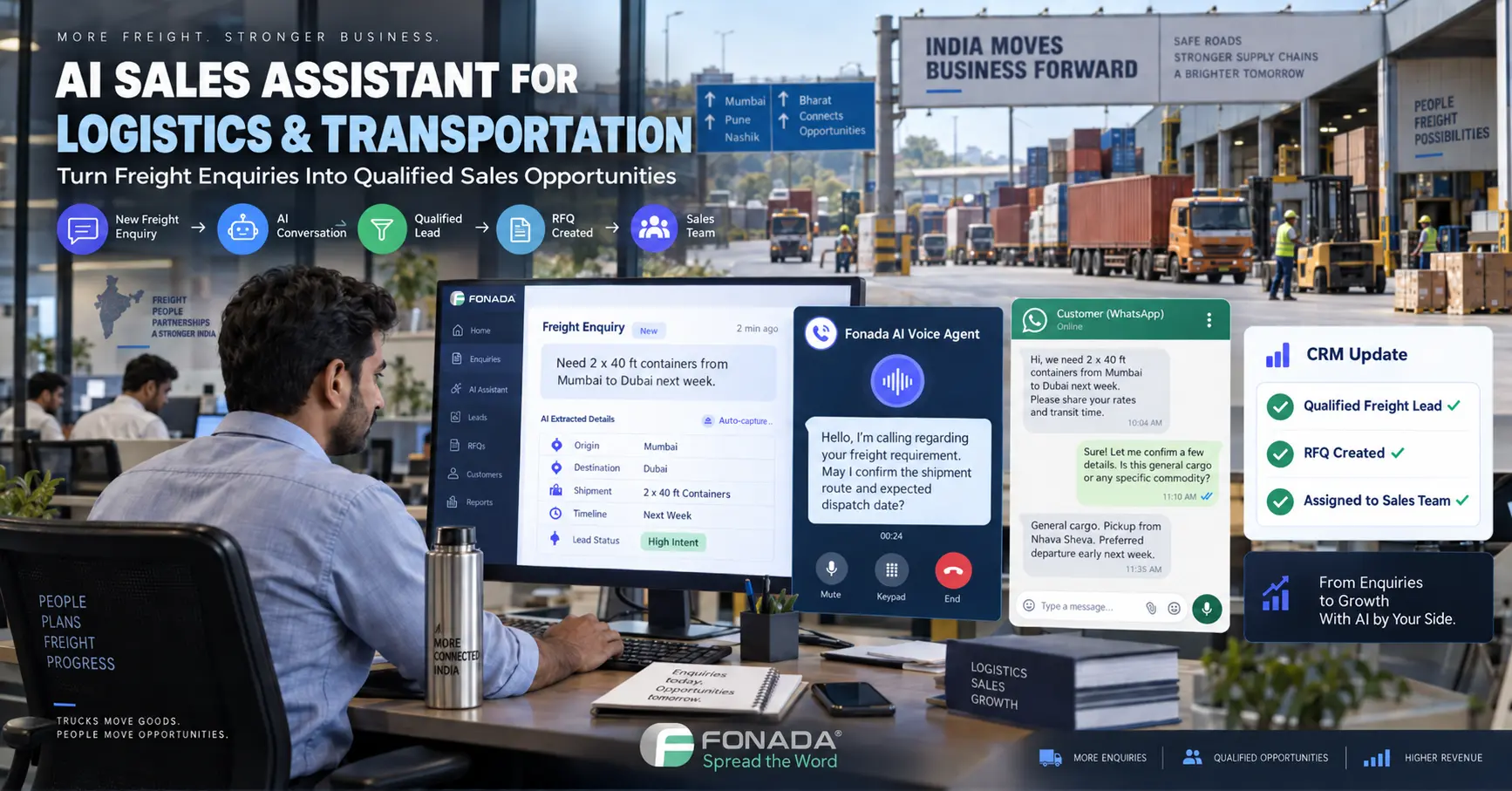
Sep 18, 2026
AI Sales Assistant for Logistics and Transportation
India’s logistics and transportation sector moves fast, but the sales process often does not.... Read MoreLatest Updates
From Fonada
Industry Insights, Trends, Innovations, Updates, and Case Studies from Industry Experts
View
Customer
Reviews
Discover why our customers love us - read their authentic and heartfelt reviews!
View
Case
Studies
Explore real-life scenarios, offering analysis, and solutions to practical challenges
View
Convert Leads Into Sales With Fonada
Trusted CPaaS Solution Provider