Blog
WhatsApp Marketing Bidding for Fintech in India: Meta Max Price, Timing & Delivery Guide (2026)
September 28, 2026
10 min read
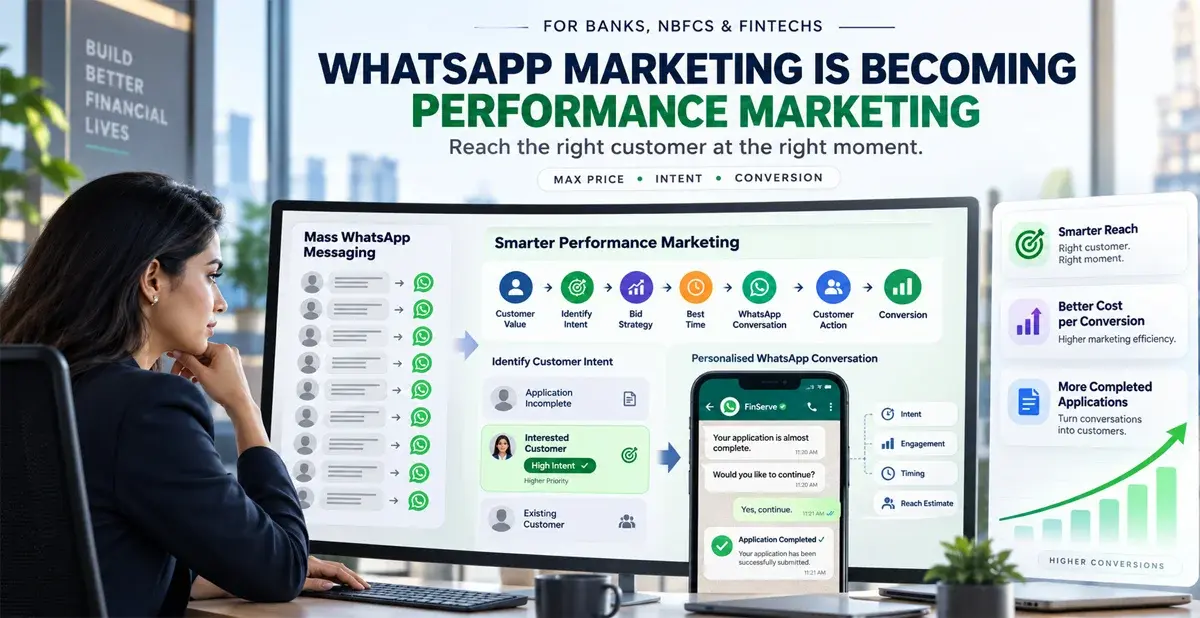
Meta is moving WhatsApp marketing beyond a fixed-price messaging model. For banks, NBFCs and fintechs, the new questions are: who is worth reaching, how much should you bid, when should you send, and how do user-level limits affect delivery?
For years, WhatsApp marketing planning was straightforward: choose an opted-in customer list, select an approved template, send the campaign and pay the applicable Meta rate for each delivered message.
Meta’s new Max Price capability for the WhatsApp Marketing Messages API changes that model. A business can now specify the maximum price it is willing to pay for a marketing-message delivery, while Meta can charge less than that ceiling depending on factors including user engagement and “supply health.” Meta also provides reach-estimation tooling to forecast the relationship between pricing, cost and expected deliveries.
For fintech marketers, this turns WhatsApp from a simple message-delivery channel into something closer to a performance-optimisation problem.
What is WhatsApp Max Price?
Max Price is a pricing control for Meta’s WhatsApp Marketing Messages API. The business sets a maximum price it is prepared to pay for a marketing-message delivery. Meta states that the actual amount can be lower, with user engagement and supply health among the factors that can influence pricing.
This is not the same as Meta publishing a new fixed India rate card. It is a bid ceiling used within the Marketing Messages API. Current partner documentation also exposes bid-amount references and reach estimation that lets businesses model how different caps may affect delivery.
|
What changes |
Old mental model |
New mental model |
|
Pricing |
Published rate × delivered messages |
Max price + actual delivery economics |
|
Audience |
Large opted-in list |
Rank customers by value and intent |
|
Delivery |
Try to reach everyone |
Pay selectively for incremental reach |
|
Timing |
Schedule a blast |
Predict when each segment is most receptive |
|
Measurement |
Sent / delivered / read |
Cost per application / approval / activation / revenue |
Does Meta automatically find the fintech’s audience?
No. For normal WhatsApp marketing-message campaigns, the business still needs the relevant customer/subscriber list and the permissions required to contact those users. Meta has separately announced that businesses in India can manage WhatsApp, Facebook and Instagram campaigns in Ads Manager, upload subscriber lists and use Advantage+ to optimise budgets across placements. That is an important convergence of messaging and performance marketing, but it is not the same as giving Meta permission to discover unknown phone numbers and push WhatsApp templates to them.
How Meta can decide whether another marketing message should reach a user
WhatsApp already manages marketing-message overload at the user level. In its help material, WhatsApp says it can use limited information such as the number of chats a user has per day/week, when they last received an offer or announcement, how often they receive those messages relative to other chats, and interactions/feedback with businesses to reduce spam and send more relevant commercial communication. Personal messages remain end-to-end encrypted.
Third-party platform documentation that implements Meta’s rules also describes per-user marketing limits as adaptive rather than a fixed “X messages per day” quota, and notes that recent marketing exposure and engagement can affect whether an additional template is delivered.
|
Why this matters to a lender If a customer has recently ignored multiple promotional WhatsApps from several brands, that customer may be a poorer delivery opportunity than someone who regularly engages. A lender that blindly bids the same amount for both customers is treating very different inventory as if it had identical value. |
Is this an auction between banks and fintech brands?
Treat it as auction-like economics, not as a proven Facebook Ads-style auction. Meta has documented a maximum bid, dynamic pricing, user engagement and supply-health factors, reach estimation and user-level protections. It has not publicly documented a formula saying that several banks are placed into a direct auction for one person’s inbox and the highest bidder wins.
That distinction matters. The safe business conclusion is: your bid affects the economics of reach, but bid alone does not define delivery.
How should a fintech decide what to bid?
Do not begin with the WhatsApp price. Begin with customer economics.
A useful first-principles ceiling is:
|
Maximum economically viable bid Probability of conversion × expected contribution per conversion × acceptable share of contribution spent on messaging |
Illustrative example: assume a successfully funded loan contributes ₹3,000 and a specific delivered-message segment converts at 0.4%. The expected contribution per delivered message is ₹12. If the business is willing to spend 10% of that expected value on WhatsApp acquisition, ₹1.20 becomes an economic ceiling—not an automatic bid.
The job of the campaign engine is then to find the lowest bid that still produces attractive incremental reach and conversion below that ceiling.
|
Fintech segment |
Customer signal |
Bid posture |
Timing posture |
|
Very high intent |
Application started / abandoned |
Higher |
Near the intent event; test quickly |
|
High value |
Pre-approved existing customer |
Higher |
Personal engagement window / relevant financial event |
|
Medium intent |
Eligibility check or recent product interest |
Moderate |
Test late morning vs early evening |
|
Engaged existing customer |
Reads/clicks regularly |
Moderate |
Use individual historical engagement |
|
Dormant lead |
No recent activity |
Low |
Test sparingly; cap frequency |
|
Repeated non-engager |
Several ignored campaigns |
Suppress / minimal |
Pause and re-qualify rather than keep blasting |
Why timing matters — without pretending Meta has a peak-hour tariff
Meta has not published a rule that says a marketing message costs more at 7 PM than at 11 AM. So fintech teams should not treat time of day as a documented direct price multiplier.
Timing still matters because engagement matters. If users are more receptive at a particular moment, the campaign can generate better reads, clicks, replies and conversions. Those behaviours also help maintain a healthier relationship with the audience instead of repeatedly adding low-engagement marketing exposure.
Current India-focused industry benchmarks commonly use late-morning and early-evening windows as starting hypotheses, not as Meta rules. The correct approach is to A/B test by product, customer type and lifecycle event.
|
Fintech use case |
Starting test window (IST) |
Better trigger than clock time |
|
Personal-loan re-engagement |
10 AM–12 PM vs 5 PM–7 PM |
Minutes/hours after eligibility check or abandoned application |
|
Credit-card upgrade / cross-sell |
Late morning vs early evening |
After relevant spending/relationship milestone |
|
Investment / savings campaign |
Salary-week tests + evening consideration window |
Salary credit / maturity / portfolio event |
|
Insurance renewal / cross-sell |
Late morning / early evening |
Renewal proximity and prior engagement |
|
KYC/application completion |
Business hours + event-triggered follow-up |
Immediately after drop-off, then measured reminder ladder |
The best “send time” for fintech is often not a clock hour. It is the moment of highest customer intent: just after an eligibility check, immediately after a dropped application, near a renewal, or around a legitimate financial lifecycle event.
Frequency may matter as much as timing
Fintechs should optimise for future audience value, not only today’s campaign. If the same customer receives every loan, card, insurance and investment offer because they are technically opted in, the brand may create a long trail of ignored messages. Meta’s user-level overload controls make that economically unattractive, even before considering blocks, complaints and brand fatigue.
A practical rule: when a user has not engaged after a defined number of attempts, reduce frequency, change the proposition, wait for a new intent signal or suppress that user from broad marketing campaigns.
Other factors that can affect WhatsApp marketing economics
|
Factor |
Why it matters |
What the fintech should do |
|
Maximum bid |
Sets the economic ceiling for a delivery. |
Create bid bands by customer value rather than one flat bid. |
|
User engagement |
Meta explicitly cites engagement as a Max Pricing factor. |
Prioritise users with recent positive interaction; suppress chronic non-engagers. |
|
Supply health |
Meta explicitly names supply health as a factor, but does not publish the formula. |
Use reach estimation instead of assuming fixed delivery at a fixed price. |
|
Recent marketing exposure |
WhatsApp limits overload and can consider how often offers/announcements are received. |
Cap frequency and avoid sending all product campaigns to the same audience. |
|
Message relevance / creative |
Relevant offers improve the chance of action; poor campaigns produce negative signals. |
Use product eligibility, lifecycle stage and specific value propositions. |
|
Timing / intent moment |
Not a published direct price coefficient, but strongly affects action. |
Optimise by event and individual engagement window. |
|
Template category |
Marketing and utility follow different rules and economics. |
Keep promotional intent in Marketing; do not game Utility. |
|
Down-funnel value |
A read is not a loan or card activation. |
Feed CRM/application outcomes back into bidding decisions. |
Do not make marketing messages look like Utility
For fintechs, this deserves special attention because the price difference creates a strong temptation to misclassify promotional traffic. Utility should remain genuinely transactional/service-oriented and non-promotional. A payment reminder or account update can be Utility when it is tied to an existing customer action or relationship; adding a loan or card offer introduces marketing intent.
The correct optimisation problem is not “how do we make a marketing offer look like Utility?” It is “how do we make every paid marketing delivery economically justified?”
Use Reach Estimation before increasing a bid
Meta’s Max Pricing tooling includes reach estimation. That allows the business to model cost and expected deliveries under different pricing strategies.
This creates a new metric for fintech teams: marginal cost of additional WhatsApp reach.
If moving the bid from ₹0.70 to ₹0.80 materially expands high-value reach, that increment may be attractive. If moving from ₹1.00 to ₹1.20 adds few incremental customers and almost no additional funded business, the extra spend is poor economics. The values here are illustrative—the method is what matters.
The KPI must change from “cost per message” to business outcome
The wrong KPI: cost per WhatsApp message.
Better KPIs include:
- Cost per completed application
- Cost per approved loan / funded loan
- Cost per activated card
- Cost per completed KYC
- Incremental revenue per ₹1 of WhatsApp spend
- Incremental contribution per 1,000 attempted recipients
- Marginal cost of incremental reach at each bid band
A practical architecture for fintech WhatsApp optimisation
The strongest system uses two intelligence layers. The fintech knows first-party customer value and intent; Meta knows platform-level delivery and engagement conditions. The bid connects the two.
|
1. Customer value |
2. Bid ceiling |
3. Send-time model |
4. Meta reach & delivery |
5. Outcome feedback |
The optimisation loop should look like this: customer value → conversion probability → maximum economic bid → best predicted send time → Meta reach estimate → delivery/read/click → application/purchase → revenue/contribution → model update.
What Meta’s Ads Manager integration signals for the future
Meta has already announced centralised campaign management across WhatsApp, Facebook and Instagram in Ads Manager. Businesses can upload subscriber lists, choose WhatsApp marketing messages as an additional placement, or use Advantage+ so Meta’s AI systems optimise budgets across placements. Meta announced this capability for India in 2025.
That is strategically important: WhatsApp is moving closer to performance marketing. A future marketing budget may be optimised across Facebook, Instagram and WhatsApp based on business outcomes rather than treating WhatsApp as a separate bulk-messaging pipe.
A 30-day action plan for fintech teams
- Separate audiences into customer-value and intent bands instead of using one master broadcast list.
- Create a baseline of delivered, read, click, reply and down-funnel conversion by segment.
- Set economic bid ceilings from contribution and conversion probability—not from competitor bids.
- Run send-time A/B tests by product and lifecycle stage; do not rely on generic “best time” articles.
- Create frequency caps and suppression logic for repeated non-engagers.
- Use reach estimation to measure the marginal cost of more delivery before raising bids.
- Feed CRM/application outcomes back into the campaign model so WhatsApp optimisation learns revenue, not only reads.
- Audit Marketing vs Utility classification and eliminate promotional content from Utility templates.
The bottom line
Meta’s Max Price update should not be viewed as another WhatsApp rate-card change. It points toward a world where the economic value of each delivery matters more than sending the maximum number of messages.
For fintechs, the winning question is no longer: “How cheaply can we send one million WhatsApps?”
It is: “Which customers are worth reaching, what is each delivery worth to us, when is that customer most receptive, and what is the minimum price required to generate profitable incremental business?”
That is the difference between using WhatsApp as a messaging channel and using it as an intelligent performance-marketing channel.
Explore more solutions on the Fonada website here: 👉 Fonada
Get in touch with us:
👉 Contact us: https://bit.ly/47OjrVH
👉 WhatsApp: https://wa.me/7479574795?text=
👉 Subscribe on LinkedIn: https://bit.ly/4pPuQL8
👉 Subscribe A DEMO: https://calendly.com/connect-fonada/30min
FAQs
It has auction-like economics because a business can set a bid ceiling and delivery economics can vary, but Meta has not publicly documented a simple highest-bidder-wins auction between brands for one user’s inbox.
No. User-level marketing protections and other delivery conditions still apply. A higher ceiling can create more opportunity for reach, but bid is not the only factor.
Use late morning and early evening only as starting test windows. Fintechs should optimise primarily around customer intent events and their own engagement data rather than follow a universal hour.
Meta has not publicly documented time of day as a direct price variable. It does cite engagement and supply health as Max Pricing factors, so timing can influence campaign economics indirectly through engagement and conversion.
They are adaptive protections that can limit promotional delivery when users appear less receptive or over-exposed. Meta does not publish a universal numeric daily cap.
It is associated with ecosystem-engagement protections and can appear when a marketing message is not delivered because of user-level marketing limits or related healthy-ecosystem controls.
No. Promotional intent belongs in Marketing. Utility should be genuinely transactional/service-oriented and non-promotional.
No. Normal marketing-message campaigns still depend on the business’s relevant subscriber/customer audience and permissions. Ads Manager integration is a separate mechanism for managing cross-platform campaigns and subscriber-list placements.
It is a Meta Marketing Messages API feature that lets a business set a maximum price for a marketing-message delivery. Meta says actual charges can be lower depending on factors including user engagement and supply health.
Share
.gif "Side Bar Gif")
Subscribe To Our Newsletter
Get updates and learn from the best
Sep 22, 2026
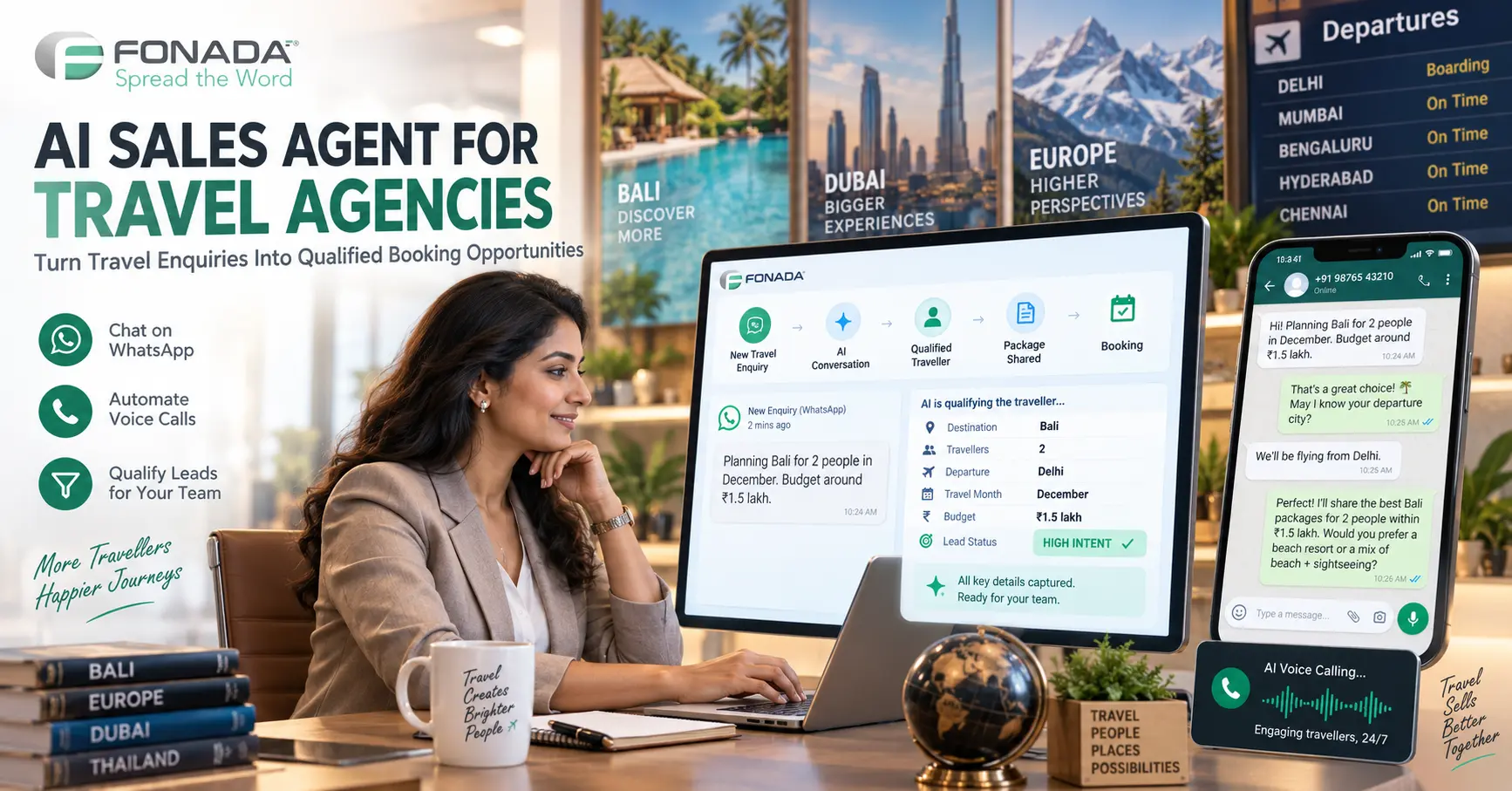
AI Sales Agent for Travel Agencies: Convert More Travel Leads
Travel enquiries rarely arrive at a convenient time. A family may ask for a Kerala package at 10:30... Read More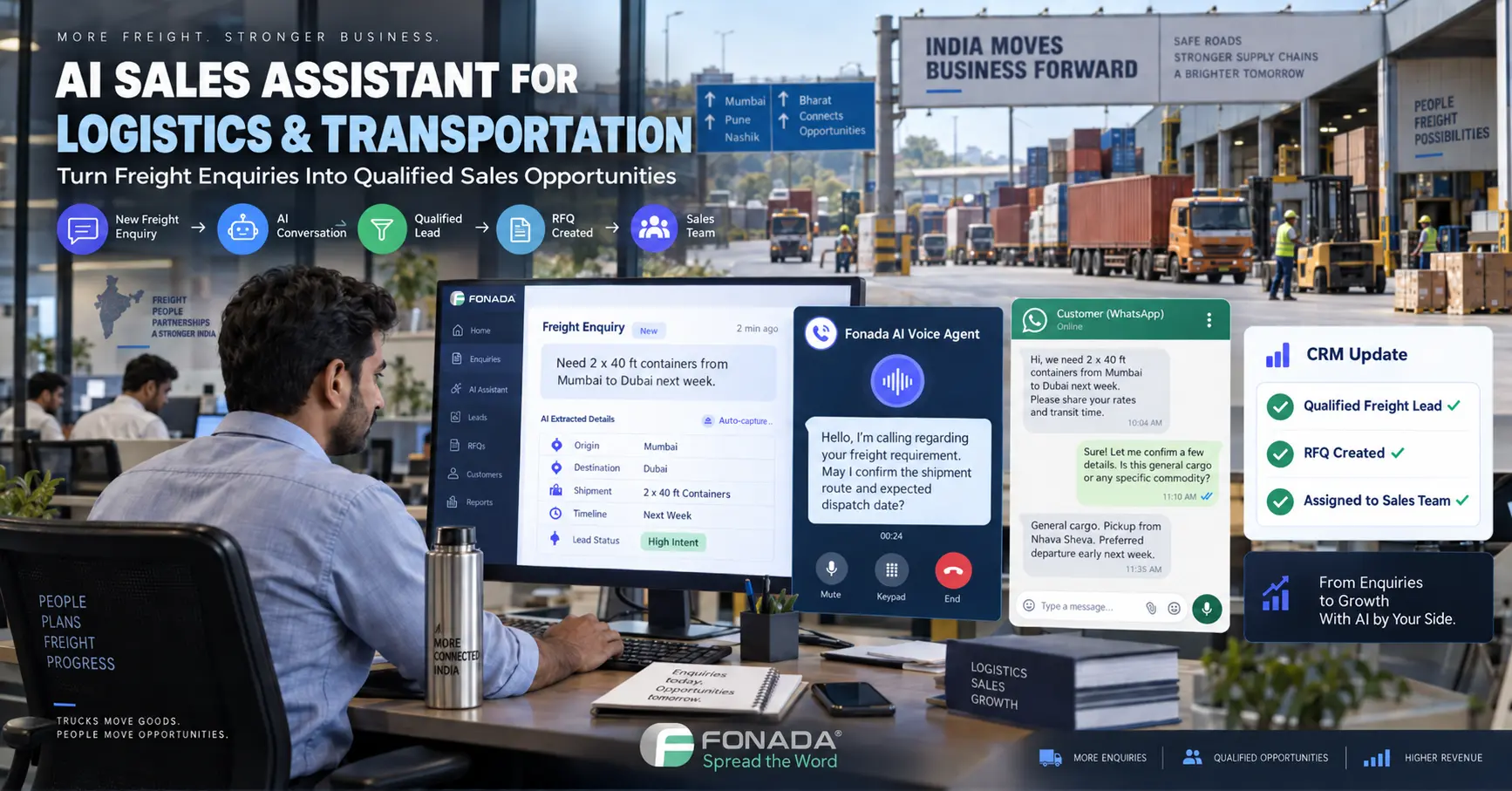
Sep 18, 2026
AI Sales Assistant for Logistics and Transportation
India’s logistics and transportation sector moves fast, but the sales process often does not.... Read More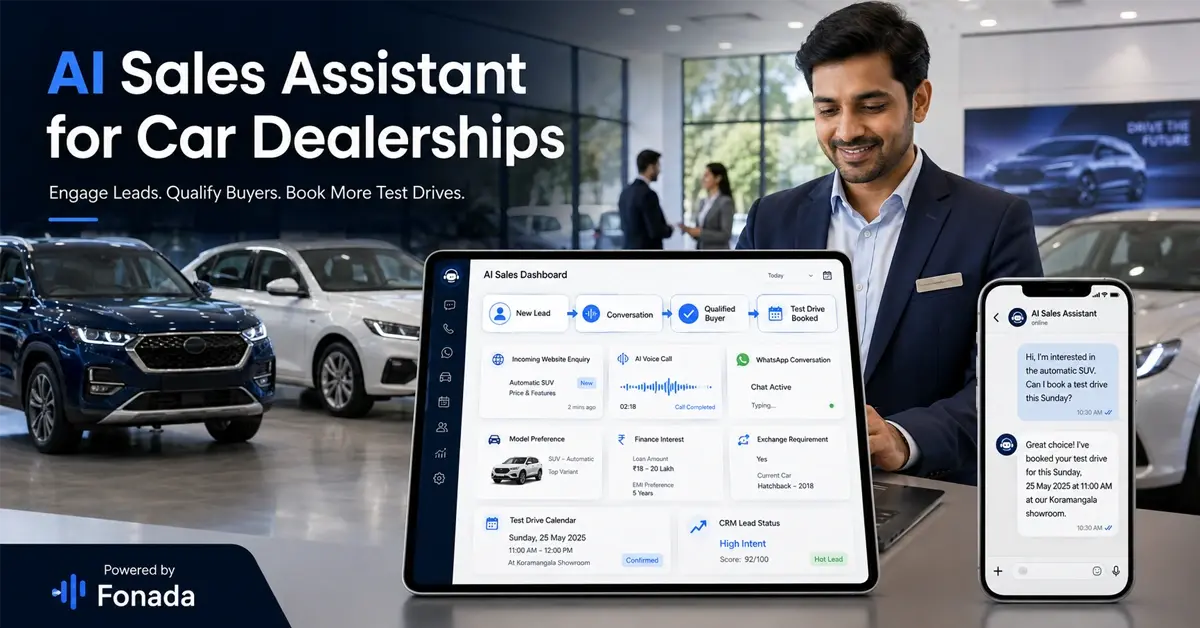
Sep 02, 2026
AI Sales Assistant for Car Dealerships: How AI Can Turn More Enquiries into Test Drives and Sales
Buying a car in India rarely starts at the showroom today. A customer... Read MoreLatest Updates
From Fonada
Industry Insights, Trends, Innovations, Updates, and Case Studies from Industry Experts
View
Customer
Reviews
Discover why our customers love us - read their authentic and heartfelt reviews!
View
Case
Studies
Explore real-life scenarios, offering analysis, and solutions to practical challenges
View
Convert Leads Into Sales With Fonada
Trusted CPaaS Solution Provider